
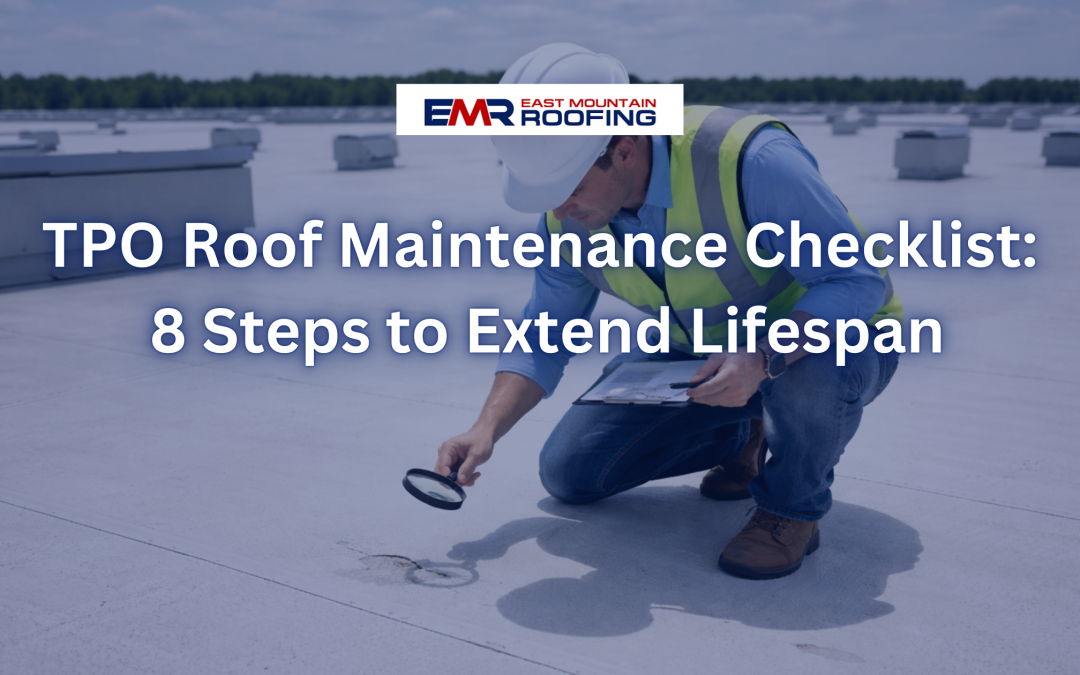
TPO Roof Maintenance Checklist: 8 Tasks for a Longer Lifespan
A TPO roof is known for its durability, reflective properties, and heat-welded seams, but even the strongest roofing systems require routine maintenance, especially in New Mexico’s high-UV, high-wind climate.
Whether installed on a home or a commercial building, a TPO roofing system faces environmental factors like severe weather events, chemical exposure, and heavy foot traffic.
By caring for the TPO membrane, drainage systems, flashing details, and roof edges, property owners can minimize membrane damage, avoid ponding water, and extend overall TPO roof longevity. Setting up a regular inspection schedule is one of the best ways to keep a flat roof performing at its peak.
This TPO roof maintenance checklist outlines eight essential tasks that help property owners protect their roofing investment and prevent premature deterioration—and this article gives comparison between TPO vs PVC roofing if you’re evaluating long-term performance differences between the two systems.
1. Inspect the TPO Membrane Surface for Damage or Wear
Begin by scanning the TPO membrane surface for early signs of deterioration. Look for scuffs, punctures, wrinkles, membrane lifts, or exposed scrim, especially in high-traffic areas or around HVAC units. These early signs often appear in north-facing sections or areas that receive less sunlight.
Check for TPO roofing shrinkage or bridging at transitions where the material expands and contracts, as these stress points can trap ponding water and increase the risk of premature membrane failure. This can appear near parapet walls, corners, or around penetrations. Industrial fallout, pine needles, tree sap, or biological growth can also weaken TPO surfaces over time.
Document all vulnerable points and take photos so your roofer can evaluate potential leak points and determine whether bonding adhesive touch-ups or more extensive repairs are needed.
Industry standards from the National Roof Certification and Inspection Association (NRCIA) show that detailed documentation helps identify roof deterioration before it spreads across multiple layers.
2. Check All TPO Seams and Heat-Welded Connections
Seam failures are a leading cause of premature failure in TPO roofing membranes. Review all heat-welded seams for edge lift, fish-mouthing, dirt buildup, or separation. Even a minor cold weld can lead to membrane degradation or water accumulation during the monsoon season.
Inspect factory-welded seams, T-joints, and field-welded connections created during installation. Areas with frequent thermal movement or foot traffic are more vulnerable to seam failures.
If you notice widening gaps or uneven bonding, schedule professional roof inspections quickly. Maintaining tight seams is critical for both residential and commercial TPO roof performance.
3. Clean the TPO Roof Surface to Maintain Reflectivity and Prevent Degradation
Regular cleaning preserves the reflective properties of your TPO roofing system and supports better energy efficiency. Dirt, soot, pollen season buildup, and biological contaminants like algae growth reduce reflectivity and increase heat absorption.
Perform TPO roof cleaning using a gentle approach—mild cleaning solutions, a soft bristle push broom, or a low-pressure washer. Avoid harsh solvents or high-pressure washing that can damage the membrane. A pressure washer can be used only at a controlled distance to avoid membrane damage.
Focus on low areas, drains, and scuppers where sediment, pine needles, and water pooling collect. As outlined by the Department of Energy’s cool roof overview, keeping a reflective roof surface clean improves energy efficiency, especially in sun-heavy climates.
Regular cleaning prevents mold growth, algae, and biological contaminants that cause roofing materials to deteriorate prematurely.
4. Remove Debris and Prevent Ponding Water
Ponding water and water accumulation are major contributors to membrane deterioration and premature failure. Clear the roof surface of leaves, branches, dirt, and industrial fallout that block drainage systems. Debris left on a flat roof traps moisture and attracts biological growth that breaks down the roofing membrane.
Check all drainage systems, such as scuppers, gutters, and internal drains, to ensure water can move freely. Property owners should pay extra attention after severe weather events or high winds.
Standing water stresses the roof structure, increases the chance of membrane degradation, and accelerates wear on TPO systems. Preventing ponding water is one of the simplest ways to extend your roofing investment.
5. Inspect Flashings, Edges, and Penetrations
Flashings and roof edges are among the most vulnerable points on any flat roof. Examine parapet walls, pipe penetrations, skylights, and HVAC units for cracked sealant, loose termination bars, lifted flashing, or membrane shrinkage.
Pre-fabricated TPO boots should be inspected for splitting or wear. These areas often experience chemical exposure, foot traffic, or vibration from attached equipment. Because flashing details protect joints and transitions, early signs of failure should be addressed immediately to prevent extensive repairs.
Lingering issues around penetrations commonly lead to leaks in residential and commercial roofing systems. Routine maintenance around these areas protects both single-ply membranes and roofing materials beneath multiple layers.
6. Check Perimeter Securement and Wind-Vulnerable Areas
High winds in New Mexico frequently strain perimeter securement. Inspect coping caps, fasteners, roof edges, and termination bars for movement or gaps. Any loosened components make the roofing membrane more susceptible to uplift, especially on a flat roof.
Look for fluttering, lifting, or stretching during windy days. Even minor changes can lead to premature deterioration or membrane damage when environmental factors worsen. Regular maintenance prevents these small issues from becoming major system failures.
7. Inspect Rooftop Equipment and Walk Pads
HVAC units, satellite equipment, and solar conduit lines often introduce abrasion and vibration that weaken TPO thermoplastic polyolefin membranes. Inspect the surrounding area for scuffing, punctures, dropped tools, or oil drips that degrade TPO material over time.
Ensure walkway pads are fully adhered and intact.
Walk pads reduce wear from foot traffic and protect the roofing membrane from premature failure. If the mats are loose, rebond them with appropriate bonding adhesive before the damage spreads across a larger square foot area.
Regular maintenance around equipment prevents biological contaminants, mold growth, and other environmental factors from shortening the lifespan of commercial roofing systems.
8. Schedule Seasonal or Annual Professional TPO Roof Inspections
Regular inspections help property owners catch membrane degradation before it compromises the entire system. Spring and fall are ideal for evaluating the TPO roof before monsoon rains or drastic temperature swings.
A professional roofer can test seams, confirm securement, inspect for membrane shrinkage, and identify potential leak points beneath the surface. Specialists also evaluate drainage systems, flashing details, and vulnerable points around penetrations. Routine roof inspections support warranty compliance and help avoid extensive repairs later.
Homeowners can easily schedule a free roof inspection with East Mountain Roofing for tailored guidance and maintenance support.
Schedule a TPO Roof Maintenance Plan or Inspection in New Mexico
A consistent roof maintenance plan is essential for extending the lifespan of your TPO roofing system, and it’s one of the best ways to prevent small issues from turning into costly repairs.
East Mountain Roofing provides free inspections, quick turnaround times, and dependable service for homeowners across Albuquerque, Santa Fe, Rio Rancho, the East Mountains, and surrounding communities.
If you want to protect your roofing investment and improve long-term performance, reach out to get a free estimate, and let’s schedule your roof inspection today.