
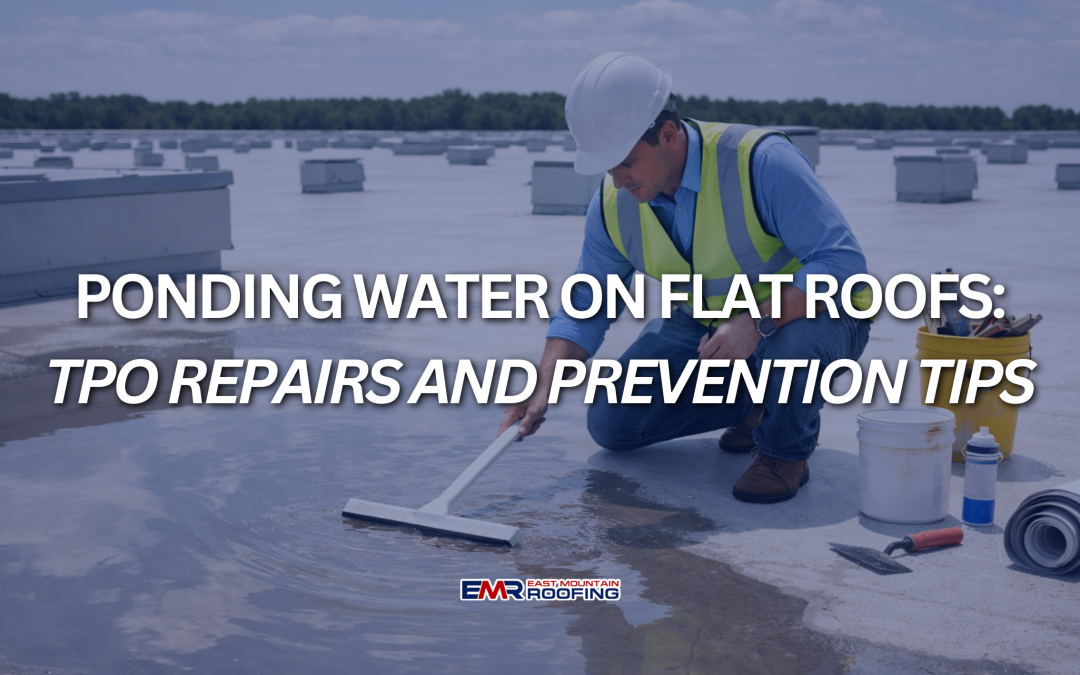
Ponding Water on a Flat Roof: TPO-Specific Fixes and Prevention
TPO roofs are durable and reflective, but ponding water is one of the biggest long-term risks for any flat roof. When water sits for more than 48 hours, it can stress seams, reduce membrane flexibility, saturate insulation, and hide developing leaks. In New Mexico’s monsoon seasons and high-UV climate, chronic ponding accelerates aging and raises cooling loads.
This guide explains why ponding develops on TPO roofing systems, what warning signs to watch for, and the best repair and prevention methods to stop ponding water and protect the roof long-term.
Common Causes of Ponding Water on TPO Roofs
Ponding water usually points to a drainage or structural issue rather than a membrane problem alone. Below are the most common sources homeowners should understand before choosing a repair strategy.
Drainage Design Issues
TPO roofs rely on proper slope to move water toward drains or scuppers. When slopes fall below ¼ inch per foot, water moves too slowly and often settles in low-lying areas. Even a missing or undersized drain can force water pools to collect in low spots, especially on roofs with less than the minimum slope of one-quarter inch per foot.
Some roofs also lack enough drains for the home’s square footage or have drains placed too far from the main flow path. Undersized scuppers can restrict water movement during heavy New Mexico rain events.
Flat commercial roofs are particularly vulnerable when clogged drains interrupt roof drainage and allow water to remain on the surface to soak insulation or create dips in the roofing system.
The ARMA Ponding Water Basics guide emphasizes the importance of proper drainage design in preventing long-term moisture issues on low-slope roofs.
Clogged Drains, Scuppers, and Gutters
Wind-blown debris, leaves, dirt, and pine needles frequently clog drains in Central New Mexico. Without strainers or protective screens, debris falls directly into the drain bowl and restricts flow. Even partial obstruction can cause water to back up and linger long after a storm.
Structural Deck Deflection
As a roof ages, the decking beneath the membrane can weaken. Moisture intrusion or past leaks speed up that process. Over time, the deck may sag under load, creating a natural basin where water collects.
These structural dips often grow slowly, making them easy to miss until ponding becomes chronic. In extreme cases, compressed insulation or creating dips through repeated foot traffic can lead to structural damage that requires immediate attention.
Compressed or Wet Insulation
When insulation becomes saturated, it loses rigidity. This creates dips under the TPO membrane, which then collect water during each storm. Compressing insulation during installation or repairs can also create small depressions that worsen over time.

Installation Errors
Poor slope creation, inconsistent tapered insulation installation, or improper membrane tensioning can leave a roof vulnerable to ponding. Small imperfections at the start can develop into persistent low spots after years of UV exposure and thermal movement.
The National Roofing Contractors Association advises building owners to regularly inspect roof surfaces for early warning signs of membrane damage, debris buildup, and conditions like freeze–thaw cycles that can worsen existing ponding. Their inspection and maintenance guidelines emphasize the importance of routine monitoring to prevent costly issues.
Risks of Ponding Water on TPO Roofs
TPO is designed to handle heat and UV exposure, but prolonged moisture reduces its resilience. Standing water accelerates membrane wear and puts stress on seams and laps. Areas that remain submerged are more likely to develop seam separation or slow leaks, especially during freeze–thaw cycles.
Key issues caused by ponding water include:
- Saturated insulation that reduces energy efficiency and creates soft spots
- Algae or microbial growth that discolors the surface and reduces reflectivity
- Added weight that worsens deck deflection and deepens low spots over time
Standing water that lingers on a roof surface can lead to interior damage, mold growth, and expensive repairs if roofing materials begin to break down. Even modified bitumen and other flat-roof systems face similar risks, but TPO is especially sensitive to constant moisture and UV exposure.
Facility managers should treat any water that remains after 48 hours as a serious concern requiring expert assessment.
A roof does not fail immediately because of ponding, but the long-term compounding damage shortens the system’s lifespan and may affect warranty compliance. Small puddles after a storm are normal; repeating ponding in the same areas after every rainfall is not.
How to Diagnose Ponding Water Problems on a TPO Roof
Homeowners can perform an initial assessment before scheduling a professional inspection. Always avoid walking on wet areas and observe from a safe vantage point when possible.
Start by looking at the roof shortly after rainfall. Note which areas continue to hold water. Look for algae streaks, dirt rings, or discoloration that indicate long-term moisture. If the membrane appears softer in some areas, the insulation below may be compressed or wet.
Document what you see, including:
- Time passed since rainfall
- Water depth (a coin or small ruler works well)
- Location relative to drains, scuppers, penetrations, and equipment
If water pools near HVAC units, drains, or roof edges, it may indicate improper slope or drainage system limitations. Standing water after each storm is a strong sign of drainage issues that need professional attention before they lead to roof leaks or membrane deterioration.
Roofing professionals use moisture meters, infrared scanning, and slope measurements to confirm underlying issues and determine the most effective repair method.
TPO-Specific Repairs for Ponding Water Issues
Once the cause of ponding is identified, repairs focus on restoring proper drainage, reinforcing the roof structure, and protecting the membrane.
Professional roofing contractors often combine multiple drainage solutions, such as tapered insulation boards and additional roof drains, to stop ponding water before it causes membrane damage or structural concerns.
Tapered Insulation Systems
Tapered insulation is the most reliable long-term fix for chronic ponding. It builds slope into an otherwise flat roof, directing water toward drains and eliminating low areas.
Tapered insulation helps eliminate low spots by adding a foot slope so the roof can properly direct water toward drains and stop ponding problems before they worsen.
Roof Crickets and Saddles
Crickets (also called saddles) are small, angled structures that redirect water around obstacles like HVAC units, skylights, and parapet walls. They prevent water from collecting in shadowed or obstructed areas and improve overall drainage performance.
Roof crickets are especially effective at redirecting water around HVAC units where water pools frequently due to airflow disruption and debris buildup.
Drain Upgrades (New Drains, Larger Drains, Overflow Drains)
Roofs with insufficient or undersized drains benefit from adding new drains or enlarging existing ones. Overflow drains offer protection during severe storms or when debris restricts the primary drains. Adding additional roof drains or enlarging existing drains is one of the fastest ways to stop ponding water on a TPO roof and restore proper drainage—an important step often highlighted in a thorough TPO maintenance checklist to prevent long-term damage..
Structural Corrections
When the deck itself has deflected, adding tapered insulation or crickets may not fully resolve the problem. In these cases, roofing and structural professionals may reinforce or correct the deck so the membrane can shed water properly.
When a building experiences deck sagging, the lack of proper slope may cause ponding water to accumulate repeatedly, requiring structural adjustments to stop ponding long-term.

Membrane Repairs
Chronic ponding often causes seam separation, flashing wear, or surface degradation. After correcting drainage, roofers repair seams, reinforce weak areas, and replace compromised membrane sections to restore performance.
If standing water has already caused membrane damage, repairs may also include reinforcing seams and replacing sections worn down by rain, UV exposure, and freeze-thaw cycles.
How to Prevent Ponding Water on a TPO Roof (Proactive Steps)
Most ponding issues worsen slowly, so regular maintenance plays a big role in prevention. Seasonal debris removal is especially important before the monsoon season. Keep drain strainers, scuppers, and gutters clear of leaves and wind-blown material.
Inspect the roof after major storms and look for new soft spots or depressions. Pay special attention to areas near rooftop equipment, parapet walls, and penetrations. Avoid walking on wet or ponding areas since this can compress insulation and deepen low spots.
Building owners should schedule regular inspections to spot ponding problems early and avoid expensive repairs. Even small amounts of debris can block drains and interfere with proper drainage, allowing standing water to weaken the roof over time.
A well-maintained drainage system helps stop ponding water and protects the roofing system for over a decade.
Schedule a Flat Roof Evaluation for Ponding Water in New Mexico
If ponding water remains on your TPO roof for more than 48 hours or keeps forming in the same areas, it’s time for a professional evaluation.
East Mountain Roofing provides free flat-roof and TPO inspections with typical scheduling in 24–48 hours. Homeowners across Albuquerque, Rio Rancho, Santa Fe, and the East Mountain communities rely on our team for accurate diagnostics and long-lasting repair solutions.
Whether you manage a home or a commercial roof, EMR provides professional solutions to stop ponding and protect your building from water damage year-round. Call (505) 264-7081 or fill out our contact form to request a roof estimate.