
Flat Roof Drainage Systems: Scuppers, Roof Drains, and Gutters Explained
Flat roof drainage choices matter more in New Mexico than many owners expect. Dust, wind, sun exposure, and short bursts of heavy rain place unique stress on flat roofs and their drainage systems.
This guide breaks down flat roof drainage: scuppers vs drains vs gutters, how each roof system works, and what maintenance really looks like for commercial buildings in Albuquerque, Rio Rancho, Santa Fe, and the East Mountains.
You will learn how flat roof drainage systems are designed, how scuppers vs roof drains compare, and how to evaluate your roof drainage setup before the next monsoon storm. Albuquerque and Rio Rancho buildings often see drainage issues after wind events push debris into scuppers or strainers just before heavy rain.
If you need help evaluating your system, the team at East Mountain Roofing provides inspections and maintenance guidance for flat and low-slope commercial roof systems across Central New Mexico.
Why Flat Roof Drainage Design Matters in New Mexico
Flat roofs depend entirely on proper drainage. Unlike pitched roofs with shingles or tiles that naturally shed rainwater, flat roof drainage systems rely on gravity, roof slope, and well-designed drains, scuppers, or gutters to move water off the roof’s surface.
Heavy but brief monsoon downpours test drainage capacity quickly. Wind-driven debris reduces flow efficiency and increases the risk of clogged drains, blocked scuppers, and standing water. Many commercial structures look fine during dry inspections, yet water ponding appears after a storm.
Positive drainage means water flows off the entire roof without lingering long enough to cause water infiltration, water damage, or additional weight on the structure.
This includes accounting for slight pitch, roof deck deflection, and overflow drainage. In Santa Fe, a commercial roof may appear dry most of the year but overwhelm internal drains during sudden cloudbursts. East Mountain properties often face higher debris loading due to constant wind exposure.
Overview of Flat Roof Drainage Systems: Scuppers vs Drains vs Gutters
There is no one-size-fits-all roof drainage solution. Roof size, roof area, parapet wall design, adequate slope, and access for regular maintenance all influence what works best for commercial properties.
At a high level:
- Scuppers: Openings through a parapet wall that allow water to exit laterally through the exterior wall.
- Roof drains: Internal drains connected to drainage pipes and interior plumbing systems.
- Gutters: Edge-mounted systems at the roof’s edge that channel water away from the building using downspouts.
Each roof system handles rainwater differently. The right choice depends on building design, structure, and maintenance expectations. The sections below explain how scuppers, internal drains, and gutters perform in New Mexico conditions.
Scuppers on Flat Roofs (Parapet Wall Drainage Systems)
Scuppers are common on flat roofs with a parapet wall. Water flows across the roof’s surface and exits through wall openings, often into downspouts or onto splash blocks that direct water toward the ground and away from the building.
Best use cases:
- Commercial buildings with parapet walls
- Structures where internal pipes are limited or undesirable
- Roof systems where visible drainage is preferred
Advantages:
- Simple installation with fewer concealed components
- Easier to inspect visually from grade in some cases
- Fewer hidden drainage pipes inside the structure
Limitations in New Mexico:
- Wind can push debris directly into scupper openings
- Improper head height can allow water ponding before overflow activates
- Freeze cycles and masonry buildup can restrict flow
Parapet designs must accommodate monsoon roof drainage volume, especially when gravel or dust accumulates near openings. Winds can push pine needles and grit into scuppers quickly. According to IIBEC guidance on overflow and scupper requirements, secondary drainage must prevent structural overload if primary systems become blocked.
Roof Drains on Flat Roofs (Internal Drains for Commercial Roofs)
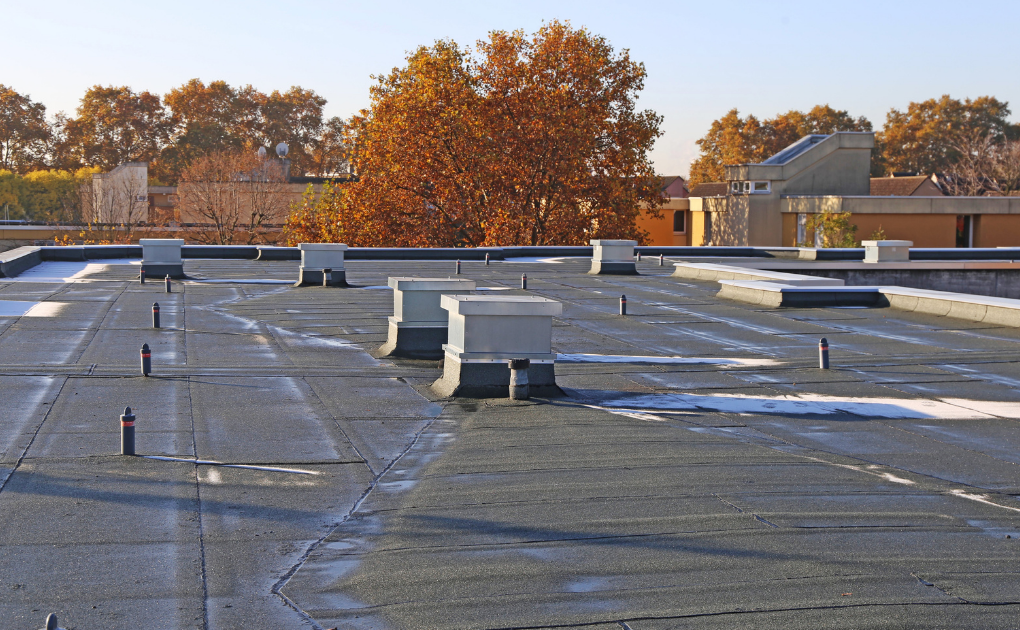
Roof drains, sometimes called inner drains or internal drains, collect rainwater at designated low points in the roof deck. Water flows into strainers and through drainage pipes routed inside the building.
Best use cases:
- Large commercial roof areas
- Many commercial structures with interior plumbing infrastructure
- Buildings that require controlled discharge locations
Advantages:
- Efficient for moving large volumes of rainwater
- Less exposure at the exterior wall compared to scuppers or gutters
- Reliable solution for wide roof spans
Limitations in New Mexico:
- Drain strainers clog quickly with dust and debris
- Blocked systems are not always visible from the ground
- Maintenance access to pipes is often overlooked
In Albuquerque, dust storms frequently precede heavy rain. That combination leads to clogged drains and water ponding across the roof sheathing. Rio Rancho commercial structures with broad flat surfaces depend on regular cleaning to maintain proper drainage.
The NRCA Roofing Manual outlines drainage design and maintenance considerations for commercial roof systems.
Gutters on Flat and Low-Slope Roofs (Edge-Based Drainage Systems)
Gutters are more common on flat or low-slope roofs without a parapet wall. Water exits at the roof’s edge and is captured in exterior gutter systems, then directed through downspouts away from the building.
Best use cases:
- Flat roofs without parapets
- Smaller commercial buildings
- Mixed-use commercial properties
Advantages:
- Easy to inspect and maintain
- Exterior access for repairs
- Straightforward installation and replacement
Limitations in New Mexico:
- Wind easily fills gutters with debris
- Fast storms can overwhelm undersized systems
- Sagging sections reduce flow and cause standing water
Rio Rancho and East Mountain buildings often require more frequent gutter maintenance due to wind exposure. Albuquerque sites near trees may see rapid debris buildup before storms. If gutters are clogged, rainwater can pool and increase erosion risk near the foundation.
Maintenance Realities for Flat Roof Drainage Systems in Dusty and Windy Conditions
Drainage performance depends as much on maintenance as design. Even well-installed drainage systems fail if debris, dust, and gravel accumulate across the roof.
What to expect in New Mexico:
- Dust storms load scuppers and drains quickly
- Wind redistributes debris between scheduled cleanings
- Monsoon timing means issues surface fast
- Overflow paths must remain clear to protect the structure
Maintenance comparison:
- Scuppers: Maintain clear wall openings and verify elevation relative to roof slope
- Roof drains: Inspect strainers, check for clogged pipes, and confirm adequate slope toward drains
- Gutters: Perform regular cleaning, confirm proper pitch, and inspect downspouts
Albuquerque facilities teams often adjust maintenance schedules during monsoon season. East Mountain properties may require inspection after high-wind events, even if no rain occurs.
How to Evaluate Your Flat Roof Drainage Before the Next Storm
Before storm season, review how your roof drainage system functions:
- Identify roof type and parapet wall configuration
- Confirm primary drains, scuppers, or gutters and overflow drainage
- Observe how water flows during and after rain
- Look for staining along exterior walls or roof edges
- Compare maintenance frequency to debris load
A roof that performs well in spring may struggle after summer dust events. Visual signs of water ponding, clogged drains, or slow flow are early indicators that repairs or adjustments may be needed.
Professional contractors like East Mountain Roofing can verify roof slope, drainage capacity, and compliance with code requirements for commercial buildings. This step helps protect the entire roof and extend service life.
Flat Roof Drainage: Scuppers vs Drains vs Gutters for New Mexico Commercial Roofs
Understanding flat roof drainage: scuppers vs drains vs gutters helps you choose the right system and maintain it properly. Each approach works differently, and each has strengths and limits in New Mexico’s dusty, windy climate.
Flat roof drainage systems protect your commercial roof from standing water, leaks, and premature wear. With regular maintenance and the right design for your roof size and structure, you can reduce water damage and avoid emergency repairs during the monsoon season.
If you would like to schedule a flat roof drainage evaluation or discuss long-term TPO roof maintenance, contact East Mountain Roofing at (505) 264-7081 to request a free roof inspection for your building.