
Flat Roof Restoration vs Replacement: When Coatings Make Sense (and When They Don’t)
Flat roof issues do not always require a full roof replacement. In many cases, flat roof restoration vs replacement becomes a key decision point for commercial property owners trying to balance cost and performance. Roof coatings are often marketed as a cost-effective solution, but they are not right for every flat roof.
Choosing between roof restoration and a complete replacement depends on properly evaluating the existing roof and following a detailed roofing permit checklist before work begins. Factors like moisture, membrane condition, seams, and drainage all impact the roof’s integrity.
In Central New Mexico, extreme weather conditions, UV exposure, and monsoons accelerate roof damage and heat absorption. This guide helps property owners make a practical, cost-effective decision.
What’s the Difference Between Flat Roof Restoration and Replacement?
Understanding flat roof restoration vs replacement starts with how each approach affects your existing roof and long-term performance.
Restoration focuses on:
- Extending the roof’s lifespan using coatings or overlays
- Preserving existing roofing layers and avoiding full roof replacement
- Lower upfront costs and minimal disruption
Replacement offers:
- A full roof replacement with removal down to the roof deck
- Installation of a new roof using modern materials
- Resetting the roof’s lifespan with improved structural integrity
For many property owners, restoration is a more cost-effective solution when the roof is still structurally sound. However, a complete overhaul becomes necessary when structural damage or widespread deterioration affects the entire structure.
For more options, you can also explore commercial roofing services with East Mountain Roofing.
Before deciding between restoration and replacement, it’s important to understand how professionals evaluate a flat roof.
The following steps break down the key factors that determine whether coatings are a viable solution or if a full replacement is the smarter investment.
Step 1: Check for Moisture (The Deal Breaker for Coatings)
Moisture trapped beneath the membrane is one of the biggest reasons restoration fails. When water gets into the insulation layer or vapor barrier, it leads to mold growth, structural deterioration, and further damage.
As explained by GAF Materials Corporation, leak barriers are designed to help prevent water penetration from wind-driven rain and ice dams, especially in the most vulnerable areas of a roofing system.
Signs to watch for include bubbling, soft spots, and recurring flat roof leaks. These issues indicate the existing roof may already have hidden structural weaknesses.
Applying coatings over a saturated roof deck is only a temporary solution and often results in costly repairs later. In most cases, moisture is a clear signal that flat roof replacement or full replacement is the better option.
Step 2: Evaluate the Roof Membrane Condition
The condition of the membrane determines whether restoration or flat roof repair is viable. Surface wear from UV exposure is normal, but deeper cracks, punctures, and membrane deterioration point to larger issues.
Different roofing materials behave differently. TPO, built-up roofing, and other membrane systems all respond differently to thermal movement and aging.
Some materials like asphalt shingles or slate roofs are less common on flat systems but still highlight how roof type impacts repair or replacement decisions.
If the membrane surface is intact with only minor signs of wear, restoration can improve energy efficiency and extend the roof’s lifespan. However, an aging roof with widespread damage often requires a complete replacement.
Step 3: Inspect Seams, Flashings, and Penetrations
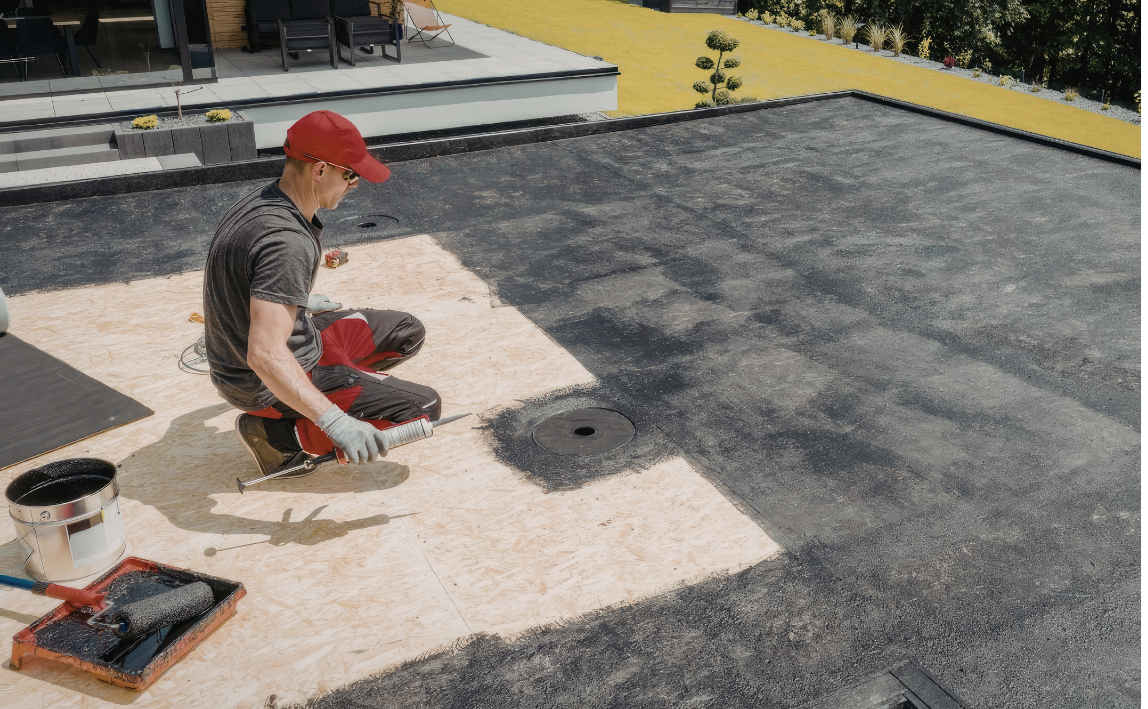
Seams and flashing details are the most common sources of roof issues. When seam failures occur or flashing begins to separate, water can enter the system and spread across roofing layers.
Penetrations from HVAC systems, vents, and even solar panel installation points create high-risk areas. These spots require targeted repairs before any restoration can be considered.
If seam stress and widespread failure are present, coatings will not restore the roof’s integrity. In these cases, roof replacement becomes the more reliable investment.
Step 4: Assess Drainage and Ponding Water Issues
Proper drainage is essential for any flat roof. Ponding water and standing water increase heat absorption, accelerate wear, and lead to membrane deterioration over time.
Coatings do not fix structural slope issues. If the roof has persistent drainage problems, it may require reconstruction or a full roof replacement to meet modern building codes.
Guidelines from the Insurance Institute for Business & Home Safety emphasize that drainage systems must remain clear and properly sloped to prevent standing water and long term roof damage.
Persistent ponding water is a strong indicator that restoration may not be a practical solution.
When Flat Roof Restoration (Coatings) Makes Sense
Restoration can be a more cost-effective solution when the roof is still structurally sound.
It works best when:
- The existing roof has minimal moisture
- The membrane surface shows only minor signs of wear
- Seams and flashing can be repaired
- Drainage is functioning properly
Benefits include:
- Lower upfront costs compared to replacement costs
- Improved reflectivity and energy efficiency improvements
- Reduced cooling costs and energy bills
- Less disruption for commercial properties
For many property owners, restoration provides energy savings and extends the roof’s lifespan by 5 to 15 years with proper maintenance.
When Flat Roof Replacement Is the Better Investment
In some cases, flat roof replacement is the only reliable long-term solution.
Replacement is recommended when:
- There is widespread damage or structural issues.
- Moisture has compromised insulation or the roof deck.
- The old roof has a history of frequent repairs or ongoing repairs.
- Structural weaknesses affect the entire structure.
While replacement costs are higher upfront, it eliminates the need for repeated repair costs and provides long-term cost savings. A new roof also improves curb appeal and meets modern building codes.
Cost vs Lifespan: Restoration vs Replacement
Comparing repair vs replacement comes down to cost per year and long-term performance.
Restoration:
- Lower initial investment
- Extends life by 5 to 15 years
- May require future recoating or minor repairs
Replacement:
- Higher upfront cost
- Full lifespan reset, often 20-plus years depending on roofing solution
- Stronger warranty coverage with modern materials
While restoration is more cost-effective in the short term, a full replacement often becomes the more reliable investment when dealing with widespread roof damage or structural deterioration.
Why a Professional Roof Inspection Is Critical Before Deciding
A visual inspection alone cannot reveal hidden issues inside roofing layers. Moisture inside the insulation layer or damage to the vapor barrier often goes unnoticed without proper testing.
Professional inspection methods such as core sampling identify hidden problems before they lead to costly repairs. This ensures property owners choose the right roofing solution instead of relying on a temporary fix.
East Mountain Roofing offers free inspections and estimates to help commercial property owners evaluate their roof condition accurately. To get started, schedule a commercial roof inspection.
Make the Right Call for Your Flat Roof Investment
Choosing between flat roof restoration vs replacement depends on properly understanding your roof’s condition. Coatings can be a practical solution when the system is structurally sound, but they are not a universal fix for all flat roofs.
Moisture, membrane condition, seams, and drainage all determine whether restoration or replacement is the right path. In many cases, delaying the decision leads to further damage and more expensive repairs.
If you are unsure whether your roof needs restoration or a new roof, the best next step is a professional evaluation. Schedule your inspection with East Mountain Roofing or call (505) 264-7081 to get clear guidance and protect your investment.
Frequently Asked Questions About Flat Roof Restoration vs Replacement
How do I know if my flat roof needs restoration or full replacement?
The most important factor is the condition of the existing membrane and whether moisture has penetrated the insulation layer. If the roof is structurally sound with only surface wear, restoration using coatings can extend its life by 5 to 15 years at a lower upfront cost. However, if there is widespread membrane damage, trapped moisture, seam failures, or recurring leaks, a full replacement is typically the smarter long-term investment. A professional inspection — including core sampling — is the only reliable way to know for sure.
Will a roof coating fix a flat roof that is actively leaking?
No. A coating applied over an active leak will trap moisture underneath the membrane, which can accelerate structural damage and lead to mold growth. Coatings are a surface-level treatment designed to protect and extend a roof that is already in reasonably good condition — not repair one that has deeper structural issues. Any active leaks or seam failures need to be properly repaired before a coating is applied.
What are the signs that ponding water means my flat roof needs to be replaced?
Occasional ponding that drains within 24 to 48 hours after rain is common on flat roofs, but persistent standing water is a red flag. It indicates a drainage or slope problem that a coating cannot solve. Over time, ponding water accelerates membrane wear, increases heat absorption, and puts added stress on the roof deck. If drainage issues are structural — meaning the roof lacks proper slope — a full replacement with a corrected drainage plan is usually the better investment over repeated restoration attempts.