
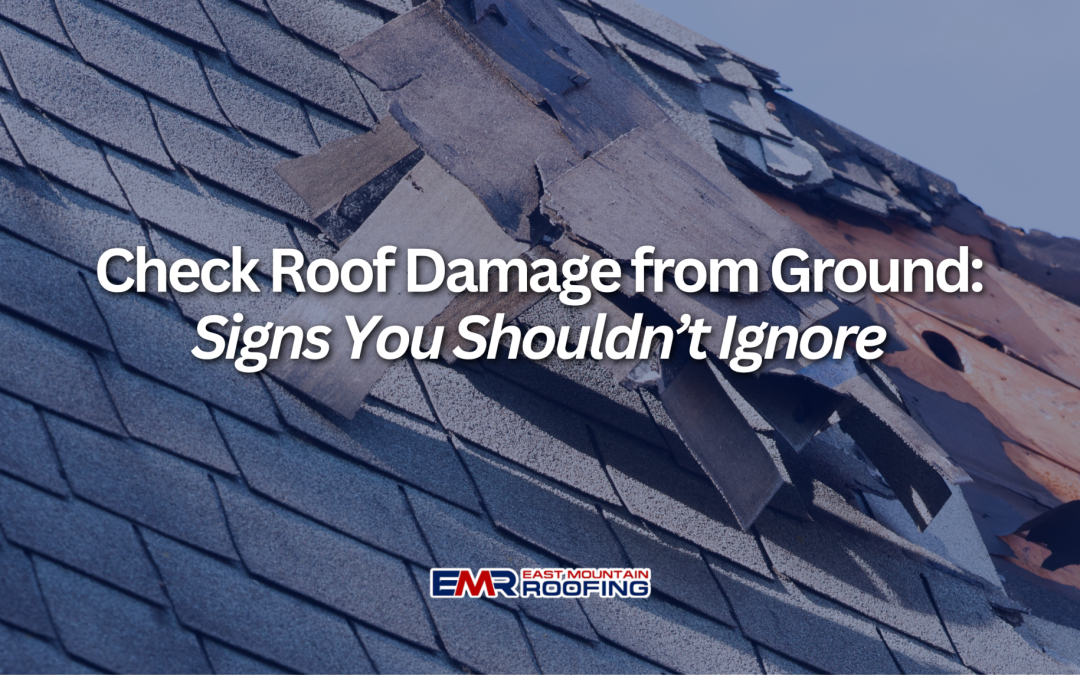
In this guide, we’ll show you how to safely check roof damage from ground using simple tools and visual cues.
Many homeowners miss early signs that lead to bigger problems later. By learning what to look for and when to call for a professional inspection, you can protect your house, prevent water damage, and avoid costly repairs.
Why High Winds Are Hard on Your Roof in New Mexico
High winds are a regular part of life in Albuquerque, Edgewood, and East Mountain communities. These storms can lift shingles, loosen flashings, and expose the roof surface to further damage.
Even a well-maintained roof can suffer wear from repeated storms, sun exposure, and seasonal changes like spring and early summer winds. Asphalt shingles, in particular, can crack, tear, or become loose over time.
The problem is that damage isn’t always visible from inside the house. Small issues can quickly lead to leaks, mold, and structural problems if left unchecked.
How to Check Roof Damage From the Ground (Step-By-Step)
Start With a Full Yard Scan
Begin your routine roof check by walking around your property at ground level.
Look for:
- Missing shingles or damaged shingles on the ground
- Gravel-like granules from asphalt shingles collecting in piles
- Pieces of roofing materials like flashings or broken shingles
- Debris, such as branches that may have impacted the roof
- Clogged gutters and downspouts that can prevent water from draining
These signs often indicate a damaged roof even before leaks appear.
Use Binoculars for a Closer Look
Using binoculars is one of the safest ways to inspect your roof without climbing up.
With binoculars, you can:
- Spot cracked, loose, or missing shingles
- Identify uneven roof lines or sagging areas
- Check for exposed nails or lifted edges
- Look for worn areas caused by sun exposure or hail
This allows homeowners to inspect the roof safely without the risks of using a ladder or walking on a potentially dangerous surface.
Check Roof Edges and Flashing
Roof edges and penetrations are some of the most vulnerable areas during a storm.
Pay close attention to:
- Flashings around chimneys, vents, and skylights
- Roof edges near the eaves and fascia
- Areas where water is supposed to be redirected into gutters
Bent or missing flashings can allow water infiltration and lead to hidden roof damage.
Signs of Wind Damage You Can See Without Climbing Up
You don’t need to access the roof to notice many warning signs.
Watch for:
- Missing shingles (blow-offs)
- Damaged shingles that are cracked, creased, or loose
- Bald spots where granules have worn away
- Debris impact marks on the roof surface
- Damaged gutters, fascia, or downspouts
- Interior water stains on ceilings or walls
These visible signs often indicate deeper issues developing beneath the surface. These visible signs often indicate deeper issues developing beneath the surface.
The National Weather Service notes that when winds are sustained at 40 to 50 mph, isolated wind damage is possible, which is why it’s important to stay aware and prioritize safety after storms.

Don’t Forget the Attic Check
Your attic can reveal problems that aren’t visible from the ground.
Check for:
- Daylight coming through the roof boards or sheathing
- Damp insulation or moisture buildup
- Water stains on rafters or attic surfaces
- Musty smell, mildew, or early mold growth
Poor ventilation and trapped moisture can worsen these issues quickly. Attic inspections help confirm whether water infiltration has already begun.
What You Can’t See From the Ground (Hidden Roof Damage)
Even a careful inspection from the ground has limitations.
Some forms of hidden roof damage include:
- Subtle loosening of shingles not visible from below
- Small punctures in roofing materials
- Damage to the underlayment beneath the roof surface
- Early-stage leaks that haven’t reached ceilings yet
Missing these issues can delay the claims process if you plan to file through homeowners insurance. That’s why it’s important to schedule a wind damage roof inspection for a thorough evaluation.
When to Schedule a Professional Roof Inspection
You should schedule a roof inspection anytime you suspect damage.
Call a contractor if:
- You notice any visible signs after a storm
- There has been heavy rain, hail, or strong winds
- You see water stains or suspect leaks
- Your roof is older or has a history of issues
A professional inspection provides a complete assessment of the roof structure, including areas you can’t safely access.
East Mountain Roofing offers fast service, with estimates typically completed within 24–48 hours. We also help homeowners navigate the homeowner’s insurance claims process when storm damage occurs.
Trusted Roof Safety Resources for Homeowners
Safety should always come first when inspecting your roof.
Avoid climbing onto the roof, especially after a storm, as surfaces can be slippery and unstable. Falls are a serious risk, and DIY inspections can quickly become dangerous.
For more safety tips, review guidance from Ready.gov on emergency preparedness and home safety.
Protect Your Home With a Safe Roof Check and Expert Help
Checking your roof after high winds doesn’t have to be risky. A simple ground-level inspection allows you to spot many early signs of damage and take action before problems get worse.
However, not all damage is visible from below. Hidden issues can lead to leaks, mold, rot, and costly repairs if left untreated. That’s why a professional inspection is the safest and most reliable next step.
If you suspect damage or want peace of mind, contact East Mountain Roofing for a free inspection and honest assessment. Call (505) 264-7081 or fill out the contact form on our website to schedule your inspection.
Frequently Asked Questions About Checking Roof Damage From the Ground
What should I look for when checking my roof from the ground after a storm?
Start by walking the full perimeter of your property and looking for physical evidence of damage at ground level — shingles or shingle pieces that have blown off, dark granules from asphalt shingles collecting in the gutters or on the ground, and any debris like branches that may have hit the roof. Then use binoculars to scan the roof surface itself. Look for missing or visibly lifted shingles, uneven sections of the roofline, exposed nail heads, cracked or creased shingles, and any damage around the flashing at chimneys, vents, or skylights. These are the most reliable visual indicators of wind or storm damage you can identify without climbing up.
Is it safe to get on my roof to check for damage myself?
It’s not recommended — especially right after a storm. Roof surfaces can be slippery from rain, weakened by impact damage, or structurally compromised in ways that aren’t visible from the outside. Falls from roofs are one of the most common causes of serious home injury. The good news is that a thorough ground-level inspection using binoculars, combined with an attic check from inside, can reveal most early warning signs without putting you at risk. For anything beyond that, a professional roofing contractor has the equipment and training to safely assess the full condition of your roof.
What can a ground-level inspection miss that a professional inspection would catch?
Quite a bit. From the ground, it’s difficult to detect subtle shingle loosening that hasn’t yet become a full blow-off, small punctures in the membrane or underlayment, early-stage seam or flashing failures, and damage to the roof deck itself. Water infiltration can also begin well before it shows up as a ceiling stain inside the house. These hidden issues matter a great deal when it comes to filing an insurance claim — if damage isn’t documented accurately and promptly, it can complicate the claims process. A professional inspection identifies the full extent of the damage, including what isn’t visible from below, and gives you an accurate picture to work from.