

Hail Blistering Shingles: How to Tell Hail Damage From Shingle Blisters
Seeing dark spots or missing granules on your roof after a storm can leave you wondering what caused the damage. Hail blistering shingles is a common point of confusion because both hail damage and shingle blistering can leave similar-looking marks on asphalt shingles.
At first glance, the surface may show circular marks, granule loss, or areas that look worn, making it difficult to tell the difference.
The cause matters because hail damage is related to a specific storm event, while blistering is usually linked to excessive heat, aging, manufacturing defects, poor ventilation, or moisture trapped within the shingle.
Understanding the difference helps you plan the right repair, document potential storm damage, and have more informed conversations with your insurance company.
While this guide explains the most common visible signs, it does not replace a professional roof inspection.

Why Hail Damage and Roof Blistering Get Confused
Many homeowners assume every new mark they notice after a hailstorm came from hail, but that is not always the case. Both hail damage and roof blistering can leave dark spots, missing granules, shallow pits, or areas that resemble bruises on the roof surface. From the ground, those signs can look nearly identical.
The biggest difference is how the damage develops. Hail is caused by sudden hail strikes during a storm, while shingle blistering forms gradually as the roofing materials age or are exposed to years of heat and other environmental factors.
Rather than judging your roof by one mark, look at the overall pattern, surrounding evidence, and whether other parts of the roofing system show signs of recent impact.
For example, a home in Albuquerque may already have older sun-related wear before a summer storm arrives. After the storm, new hail marks on shingles can appear alongside existing blistering, making it easy to mistake one condition for the other.
Hail Damage vs. Shingle Blistering: Key Differences
|
Difference |
Hail Damage |
Shingle Blistering |
What Homeowners Should Do |
|
Cause |
Sudden hail impact during a storm |
Gradual deterioration from heat, aging, or other factors |
Compare storm history and roof age before assuming the cause. |
|
Pattern |
Random impacts across affected slopes |
More consistent wear on aging or sun-exposed areas |
Look for patterns instead of focusing on one mark. |
|
Texture |
May leave a soft or bruised impact point |
Often appears as a popped surface bubble |
Have the roof professionally evaluated if you’re unsure. |
|
Timing |
Usually noticed after a specific storm |
Develops gradually over time |
Consider when the marks first appeared. |
|
Collateral Damage |
May dent gutters, soft metals, and other surfaces |
Usually limited to the shingles |
Check nearby materials for additional storm evidence. |
|
Granule Loss |
Often concentrated at impact points |
Usually follows popped blisters or weathered areas |
Granule loss alone does not confirm the cause. |
|
Repair |
Storm assessment and documentation |
Roof condition evaluation |
Schedule an inspection before making repair decisions. |
1. Cause: Sudden Hail Impact vs. Gradual Surface Deterioration
Hail damage happens when hailstones strike the roof during a storm. Depending on the hail size, the impact may knock away granules, bruise the mat, or weaken the affected shingles. Over time, repeated hail impact can contribute to reduced durability, even if the damage appears minor at first.
Shingle blistering develops differently. Small bubbles form beneath the asphalt surface because of excessive heat, trapped moisture, product-related issues, aging, or other contributing factors. As the blisters break open, they expose the underlying surface and leave behind small craters.
Research from the Insurance Institute for Business & Home Safety (IBHS) shows that repeated exposure to smaller hail can gradually reduce shingle impact resistance, making roofs more vulnerable during future storms.
In Albuquerque, a hailstorm is a sudden event, while blistering on a south-facing roof may have been developing for years before the storm. Not all hail causes roof damage, so it’s helpful to understand what size hail can damage a roof.
2. Pattern: Random Storm Impacts vs. Repeated Age and Heat Wear
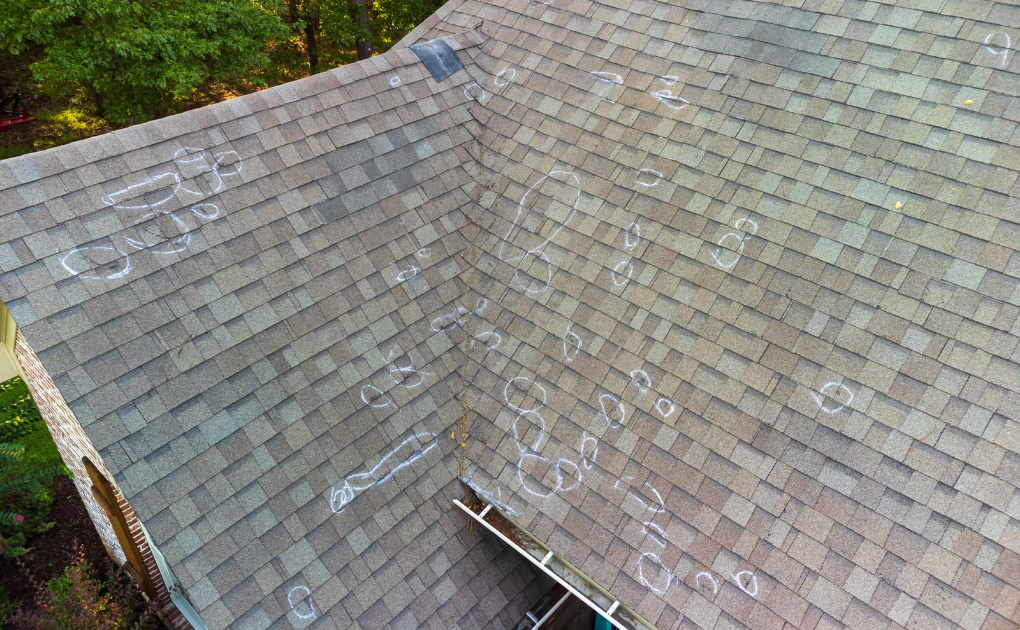
Hail damage usually appears in a random pattern across the roof slopes that faced the storm. The direction of the storm, wind, and the density of the hail can all affect where the damage appears. Roofing professionals also look for dents on gutters, ridge caps, vents, and other soft metals when evaluating a roof.
Blistering often follows a different pattern. Instead of isolated impacts, the marks may appear across larger sections of sun-exposed shingles that have experienced years of wear.
For example, if only the south-facing roof in Rio Rancho shows scattered surface openings after years of direct sun, roof blistering may be more likely unless the storm path supports hail damage.
3. Texture: Bruised Impact Point vs. Opened Surface Bubble
One of the biggest differences is texture. Functional hail damage may leave a soft or bruised spot where the impact fractured or weakened the shingle mat. Granule loss often appears directly at the point of impact.
Blistering usually leaves behind an open bubble or shallow crater after the surface breaks apart. While the appearance may seem similar, the mark is often more surface-level than a hail bruise.
After a Santa Fe hailstorm, dark circular marks should be evaluated for mat bruising instead of relying on photographs alone. A professional roofing inspection in New Mexico can help determine the difference.
4. Timing: Appears After a Storm vs. Develops Before You Notice It
Hail damage is often connected to a specific storm date. Homeowners may notice visible signs after finding dents on outdoor furniture, vehicles, or metal components around the home.
Blistering develops gradually and may have been present long before you noticed it. Many homeowners first discover it while checking the roof after a storm, even though it was already there.
For example, someone in Albuquerque may inspect the roof after an August hailstorm and find older blistering that simply became more noticeable.
5. Collateral Damage: Hail Often Leaves Clues Beyond the Shingles
Hail rarely affects only the shingles. A severe storm may also leave dents on gutters, downspouts, vent caps, skylight frames, HVAC units, window screens, fences, and other exterior metal surfaces. This collateral damage often provides valuable evidence during a roof assessment.
Blistering typically does not dent nearby materials because it develops within the shingles rather than from an external impact.
If fresh dents appear on soft metals at the same time as new roof marks, hail becomes a more likely explanation. Learn the most common hail-damaged roof signs and when it may be time to consider repair options.
If fresh dents appear on soft metals at the same time as new roof marks, hail becomes a more likely explanation. Learn more about
6. Granule Loss: Impact-Related Loss vs. Weathered Surface Loss
Both conditions can cause granule loss, but the pattern is different. Hail damage often removes granules at the exact point where hail strikes, exposing the darker asphalt beneath.
With blistering, granules usually come off after a raised bubble pops open. The resulting mark may resemble surface erosion rather than a direct strike.
Strong New Mexico heat and UV exposure can make older granule loss more visible, especially after rain washes loose granules into gutters near the eaves.
7. Repair and Documentation: Storm Assessment vs. Roof Wear Evaluation
If you think your roof has hail damage, write down the storm date and take photos from the ground if you can. Also note any dents on gutters, vents, or other areas around your home. A professional inspection can help show whether the roof has surface wear or functional hail damage that may affect the roofing system.
If blistering is widespread, the focus is usually on the roof’s overall condition, age, and repair needs. Depending on what they find, roofing professionals may recommend maintenance, smaller repairs, or replacement if the damage is extensive.
After a storm, documenting visible roof damage before scheduling an inspection can help create a clearer record of what occurred.
When to Schedule a Professional Roof Inspection
Consider scheduling a professional inspection if you notice roof marks after a known hailstorm, fresh dents on gutters or other metal components, heavy granule loss collecting near downspouts, or water stains inside your home after the storm.
It is also a good idea if the marks appear across multiple roof slopes or you are unsure whether you are dealing with hail damage, blistering, or normal aging.
For homeowners in Albuquerque, Rio Rancho, Santa Fe, Edgewood, Cedar Crest, Sandia Park, and the East Mountains, documenting the storm date, taking photos from the ground, and noting any visible collateral damage can help provide important context during the inspection.
Get a Storm Damage Inspection Before You Guess
Hail blistering shingles can look very similar from the ground, but hail damage and shingle blistering usually have different causes, patterns, textures, and repair considerations.
Looking at the timing, surrounding evidence, granule loss, and the overall appearance of the roof helps roofing professionals determine what is most likely affecting your shingles.
If your home has been through a recent hailstorm, East Mountain Roofing can help identify wind and hail damage, provide a free roof inspection and estimate, and guide you through the insurance claim process when storm damage is present.
Schedule a storm damage roof inspection, reach out to our team through our contact page or call (505) 264-7081 to have your roof professionally evaluated before making repair decisions. Our experienced team will assess the damage, explain your options, and provide a roof inspection and estimate so you can make an informed decision about the next steps.