

Parapet Wall Roof Leaks: Common Causes on Flat Roofs
A parapet wall roof leak does not always mean the main roof membrane has failed. On many flat roofs, water enters where the roof meets a parapet wall, then travels behind the waterproofing system before appearing inside the building. By the time you notice a ceiling stain or moisture, the actual leak may be several feet away.
These leaks often start at the roof coping, base flashing, termination bars, wall cracks, or drainage details rather than the open roof surface.
Finding the true source requires inspecting the entire roof-to-wall assembly, not just the visible leak. Understanding how these components work together can help you prevent water damage, avoid costly repairs, and protect your commercial property.

Why Parapet Walls Are High-Risk Leak Locations
A parapet wall is the part of an exterior wall that extends above the roof. On a flat roof, it helps protect the roof edge, supports drainage, improves wind resistance, and can hide rooftop HVAC equipment for a cleaner appearance.
At the top of the wall is roof coping, also called metal coping. This protective cap helps keep rainwater from getting inside the wall.
A parapet wall roof leak often starts where the roof meets the wall. This roof-to-wall transition is one of the most vulnerable parts of a flat roof because several waterproofing components come together in one area.
These include the roof membrane, base flashing, inside corners, termination bars, counterflashing, coping, and the wall itself. Each component helps direct water back onto the roof instead of behind the wall.
Over time, wind pressure, wind-driven rain, UV exposure, and temperature changes can wear down seams, joints, and sealant. Cracks can also develop in stucco or masonry, giving water another path into the wall. Once water gets behind the waterproofing system, it can travel through the wall before it appears inside the building.
That’s why the source of a leak isn’t always where you see the water.
In Albuquerque, summer monsoons can force rain under loose coping joints. In Rio Rancho and Edgewood, stronger winds put even more stress on exposed parapet details.
An experienced roofing contractor will inspect the entire roof-to-wall assembly because several different problems can cause the same signs of a parapet wall roof leak.
Common Causes of Parapet Wall Roof Leaks
Most roof leaks around a parapet begin where different roofing and wall materials connect. Water may enter through a small opening, travel behind the waterproofing system, and appear somewhere else inside the building.
| Leak Cause | Where Water Enters | What You May Notice | What Should Be Inspected |
| Failed coping joints | Top of the parapet | Loose metal coping, open joints, stains | Coping, splice plates, end caps |
| Base flashing failure | Roof-to-wall transition | Wrinkles, split membrane, open seams | Flashing, membrane, corners |
| Loose termination bars | Top of wall flashing | Gaps, cracked sealant | Fasteners, termination bars |
| Wall cracks | Stucco, masonry, cladding | Stains, efflorescence | Wall surface, through-wall flashing |
| Corner failures | Inside or outside corners | Lifted patches, split membrane | Corner flashing |
| Drainage issues | Roof edge | Ponding water, debris | Scuppers, drains |
| Rooftop damage | Around wall flashing | Punctures, cuts | Flashing near rooftop equipment |
1. Open or Failed Coping-Metal Joints
Roof coping is the metal cap that covers the top of a parapet wall. It helps protect the wall from rainwater, but joints can fail as buildings expand and contract. Sealant may deteriorate, splice plates can shift, and end caps may loosen over time.
Water entering through the coping often travels behind the flashing, making it appear that the membrane is leaking.
The International Building Code states that coping should protect parapet walls from the weather. However, replacing or resealing coping caps alone may not fix the problem if the coping attachment or joints have already failed.
2. Base Flashing Is Pulling Away From the Wall
Base flashing is the vertical extension of the roof membrane where it turns up the wall. This critical component can fail when the membrane pulls away, welded seams open, adhesive loses its bond, or thermal stress causes wrinkles to form.
A TPO wall flashing leak may allow water penetration even when the main roof surface looks intact. Because TPO systems rely on properly welded seams and manufacturer-approved details, a surface repair may only cover the symptom instead of fixing the source.
Learn more about how TPO roof seams and flashing are installed.
3. Loose Termination Bars or Counterflashing
A termination bar secures the top edge of the membrane to the wall, while counterflashing helps keep water from getting behind it. Both are essential parts of the waterproofing system.
Leaks can develop when fasteners loosen, termination bars pull away, or sealant cracks. Flashing should extend high enough above the roof surface to help prevent water from overtopping the detail during heavy rain.
Buildings exposed to stronger wind pressure, such as those in Rio Rancho or Edgewood, may experience these issues sooner.
4. Cracks in the Parapet Wall
Not every parapet wall roof leak starts in the roofing system. Water can enter through cracked stucco, deteriorated masonry, failed sealant, or damaged wall cladding.
Temperature changes across Central New Mexico can cause wall materials to expand and contract, leading to new cracks over time. Once water enters the exterior wall, it may travel behind the flashing before reaching the interior.
Learn more about how roof leaks travel and become difficult to locate.
5. Failed Corners and Old Membrane Patches
Inside and outside corner details experience constant movement because the membrane changes direction across multiple surfaces. Poorly welded flashing, lifted patches, or incompatible repair materials can create weak points that allow moisture inside.
Manufacturers use reinforced corner details because a flat membrane alone cannot reliably conform to these complex transitions. Proper installation helps keep the waterproofing system functional and reduces the risk of premature failure.
6. Scuppers and Roof Drains Near the Parapet
Many flat roofs drain through scuppers, which are openings in the parapet wall that let rainwater flow off the roof. Others use internal roof drains near the roof edge. Both drainage systems help prevent standing water from collecting around the wall.
Problems can occur when scupper flashing separates, debris blocks the drainage path, or ponding water reaches the wall flashing. A scupper flashing leak is often mistaken for a roof membrane failure because water usually appears near the parapet.
The International Plumbing Code requires primary roof drainage systems and, for some roof designs, secondary drainage or overflow protection. Keeping drains and scuppers clear helps reduce the risk of water penetration and future water damage.
7. Damage From Rooftop Equipment or Other Trades
Not every roof leak is caused by age or weather. Rooftop work completed after the roof was installed can damage flashing around the parapet wall. Ladders against roof coping, new conduit, HVAC work, or unapproved patches can also puncture the roof membrane or weaken nearby flashing.
These small openings are easy to miss but can let water in during heavy rain or wind-driven rain. Inspecting the flashing after rooftop work can help prevent hidden moisture, water damage, and costly repairs.
Why Patching the Flat Roof Membrane May Not Stop the Leak
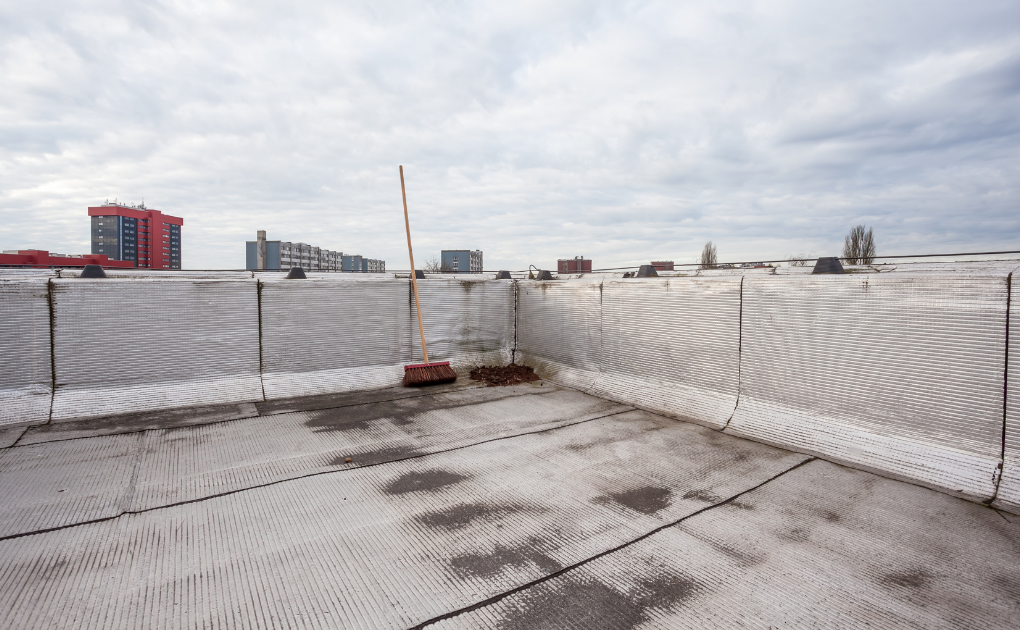
A patch on the roof membrane will not solve every parapet wall roof leak. Water may be entering through roof coping, loose termination bars, wall cracks, failed counterflashing, or a scupper flashing leak before traveling behind the membrane. By the time it reaches the interior, the true source may be several feet away.
Patching the visible area without finding the entry point may only cover the problem. Moisture can remain trapped inside the roof assembly, increasing the risk of hidden water damage, structural damage, and repeated repairs.
A professional inspection follows the water path instead of focusing only on the stain. Contractors generally inspect the coping, wall surface, flashing terminations, corners, seams, and drainage details before using moisture testing when needed.
A leak that appears only during Albuquerque’s monsoon storms, for example, may point to wind -driven rain entering through the coping or wall rather than the main roof membrane.
Get the Flashing and Wall Details Checked Before Repatching the Membrane
A parapet wall roof leak may look like it’s coming from the TPO membrane, but the real problem could be damaged roof coping, failed flashing, loose termination bars, cracked stucco, corner details, or drainage components. The spot where you see the leak is not always where the water entered.
Inspecting the entire roof-to-wall assembly helps find the true source of water penetration before it leads to bigger repairs. We recommend inspecting parapet walls at least twice a year and after severe storms to catch problems early.
If you own or manage a commercial property with a TPO roof, East Mountain Roofing can help. We install and repair TPO roofing systems and provide free roof inspections and estimates throughout Albuquerque, Rio Rancho, Santa Fe, Edgewood, and Central New Mexico.
Call (505) 264-7081 to learn more about our TPO roof services. Schedule a free roof inspection today.