

Pipe Boot Flashing Leak: Why Roof Vent Flashing Fails
A pipe boot flashing leak often begins in one of the smallest areas of your roof, where a plumbing vent pipe passes through the roofing system. While the stain on your ceiling may seem minor at first, the real problem starts at a roof penetration that is no longer keeping water out.
Every vent pipe creates an opening in your roof, and that opening relies on a properly installed pipe boot and flashing assembly to keep rain moving away from the penetration. When the flashing cracks, shifts, or was installed wrong, water can follow the pipe into your attic, insulation, or ceiling.
Understanding why these leaks happen can help homeowners recognize early warning signs and know when it’s time to schedule a professional inspection.
What Is Pipe Boot Flashing and Why Does It Leak?
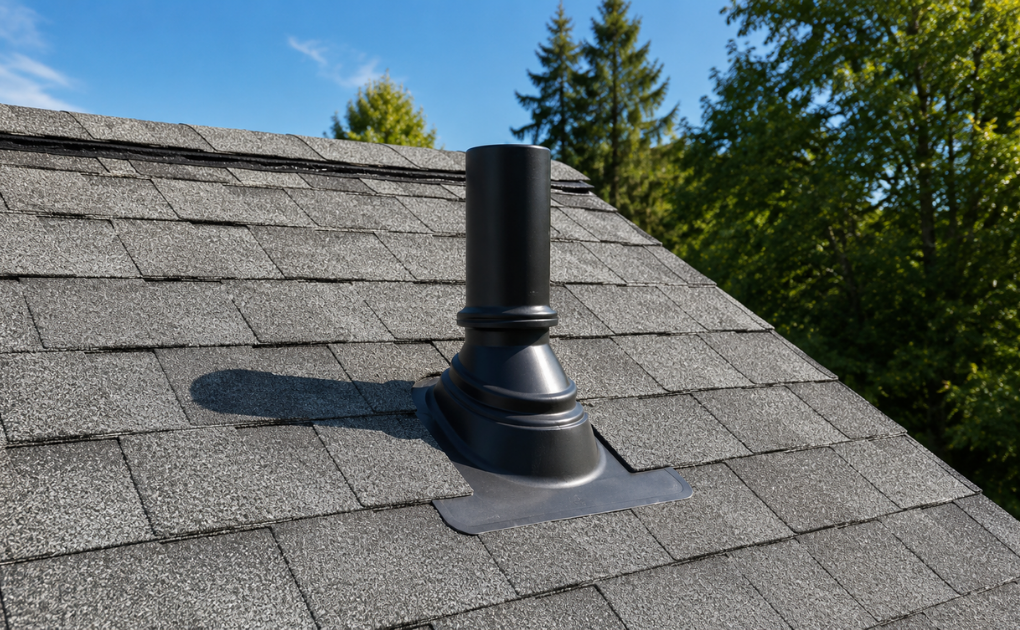
A pipe boot, also called vent pipe flashing or plumbing vent pipe flashing, is designed to seal the area where a plumbing pipe exits through the roof. Most systems include a metal or composite base that fits beneath the surrounding shingles, a flexible rubber boot or collar that wraps tightly around the pipe, and sealant or fitted components that help complete the waterproof seal.
Because every vent is one of your home’s roof penetrations, it interrupts the natural flow of rainwater. The flashing must direct water around the pipe and back onto the roof surface instead of allowing moisture to enter beneath the roofing materials. If the collar, flashing base, nails, shingles, or sealant fail, a leak can develop.
Building Science Corporation explains this principle as directing water “down and out”, meaning flashing should always move water over the drainage plane rather than allowing it into the roofing assembly.
A small ceiling stain beneath a bathroom or laundry vent may point to a failing pipe boot rather than a widespread roofing issue.
7 Common Causes of Pipe Boot Flashing Leaks
Before looking at each cause individually, here’s a quick overview of how a pipe boot flashing leak typically develops.
| Cause | What Happens | Why It Leaks | What Homeowners May Notice |
| UV damage | Rubber collar cracks or shrinks | Water follows the vent pipe | Ceiling stains, attic moisture |
| Thermal movement | Components shift over time | Small gaps develop | Drips after temperature changes |
| Poor installation | Flashing isn’t integrated correctly | Water bypasses the flashing | Early roof leaks after installation |
| Failed sealant | Seal loses adhesion | Water enters around seams or fasteners | Peeling caulking, recurring leaks |
| Damaged shingles | Roofing surface no longer sheds water | Water reaches the flashing base | Missing shingles or exposed decking |
| Storm damage | Hail or debris impacts the boot | Cracks or punctures develop | Leaks after storms |
| Previous patch work | Surface repairs hide the problem | Original leak path remains open | Leak continues despite repairs |
1. UV Damage Cracks the Rubber Boot Collar
Years of sun exposure can cause a rubber boot collar to dry out, shrink, or split. Once the collar no longer fits tightly around the vent pipe, rainwater can run down the outside of the pipe and enter the roof opening instead of staying on the roof surface.
This is one of the most common pipe boot leaks roofing contractors encounter. In Albuquerque, Rio Rancho, and Los Lunas, intense UV exposure can affect exposed rubber components more quickly than areas with regular shade.
Homeowners may notice a small ceiling stain, damp insulation in the attic, or water appearing after heavy rain.
2. Thermal Movement Opens Small Gaps Around the Vent Pipe
Daily heating and cooling cause roofing materials to expand and contract. Over time, the pipe, flashing, and surrounding shingles may all move slightly differently, creating a small gap around the collar or flashing connection.
Although these openings may seem insignificant, they can continue to grow until water begins entering the roofing system. Santa Fe and many homes throughout Edgewood, Cedar Crest, Sandia Park, and the East Mountains often experience wide temperature swings that place additional stress on roof penetrations.
FEMA recommends homeowners routinely check their roof flashing for cracks, separations, and other damage after severe weather.
3. Poor Installation or Wrong Pipe Boot Size Leaves the Pipe Vulnerable
Even a brand-new pipe boot can develop roof leaks if it was installed incorrectly or does not properly fit the vent pipe.
A flashing assembly should fit the pipe diameter, overlap the shingles correctly, and keep water flowing over the roofing surface instead of underneath it.
Problems often occur when the upper flashing edge is not lapped beneath the surrounding shingles, exposed nail heads are left unprotected, or caulking becomes the primary defense instead of proper flashing.
Some contractors may even leave shingles cut too wide around the penetration, making it easier for water to reach the roof decking.
Wind-driven rain in Albuquerque, Rio Rancho, or the East Mountains can quickly expose these installation issues. The 2024 International Residential Code requires flashing to be installed so moisture cannot enter at roof penetrations, reinforcing why proper workmanship matters as much as the materials themselves.
4. Old Sealant Fails Around the Boot or Fasteners
Sealant naturally ages over time. As it dries, it can crack, pull away, or lose adhesion, allowing water to work around the flashing, exposed nails, pipe collar, or old repair areas.
This is especially common when sealant was used to fix an installation problem instead of correcting the underlying flashing issue. Strong New Mexico sunlight, blowing debris, and dust can shorten the life of exposed sealants, making temporary repairs less reliable than a proper repair or replace decision after a professional inspection.
5. Surrounding Shingles Are Cracked, Lifted, or Missing
A pipe boot works as part of the entire roofing system. Even if the flashing itself remains intact, damaged surrounding shingles can allow water to reach the flashing base from the wrong direction, increasing the chance of a roof vent flashing leak.
Watch for cracked or lifted shingles, missing tabs, exposed underlayment, or excessive granule loss around the penetration. These conditions can affect the roof’s ability to shed water properly and place additional stress on the flashing assembly.
In Rio Rancho, strong winds and Albuquerque hailstorms frequently damage shingles before homeowners notice an indoor leak. Learn more about wind damage roof signs and when it’s time to schedule an inspection.

6. Hail, Debris, or Foot Traffic Damages the Pipe Boot
Not every pipe boot flashing leak develops because of age. Hail, falling branches, windblown debris, or people walking near roof penetrations during HVAC or roofing work can crack the rubber boot, dent the flashing base, or shift the collar out of position.
Even a small puncture can become a direct path for water during the next rain. After severe weather in Albuquerque, Santa Fe, or surrounding communities, homeowners should look for visible storm damage from the ground and inspect the attic if it is safe to do so.
If you suspect hail damage, read our guide to hail-damaged roof signs before the problem continues to spread.
7. Previous Patch Work Hid the Real Leak Source
A quick patch may stop water temporarily, but it does not always solve the underlying problem. Applying extra caulking, cement, or sealant over a cracked collar, exposed nail heads, or damaged flashing can hide the true source of a pipe boot leak instead of repairing it correctly.
Many homeowners only notice the stain inside the room and try a simple surface fix, but the original leak path often remains open beneath the patch. A temporary repair may appear successful during dry weather in Albuquerque, then begin leaking again during the next period of wind-driven rain.
A professional roofer can determine whether the pipe flashing needs to be repaired, whether a Perma-Boot is an appropriate solution for the existing boot, or whether the entire flashing assembly should be replaced to restore the roof’s integrity.
When to Call a Roofer for a Pipe Boot Flashing Leak
A pipe boot flashing leak is usually easier and less expensive to address when caught early. Schedule a professional roof inspection if you notice any of the following:
- Water stains on your ceiling after rain
- A cracked, loose, or split pipe boot collar
- Peeling or deteriorating sealant around the flashing
- Missing, cracked, or lifted shingles around the vent pipe
- Wet insulation or signs of moisture in the attic
- A leak that returns after a previous repair
Recurring leaks are often a sign that the original problem was never fully corrected. Instead of continuing to patch the area, have an experienced roofer inspect the flashing assembly, surrounding roofing materials, and roof decking to identify the true source of the leak.
For your safety, avoid climbing onto a wet, steep, icy, brittle, or storm-damaged roof. Ground-level observations, attic checks, and clear photos can help roofing professionals evaluate the issue before work begins.
After New Mexico’s monsoon storms, hail, or high winds, a timely inspection can prevent moisture from spreading into your insulation, decking, and other structural components.
Schedule a Roof Penetration Inspection Before the Leak Spreads
A pipe boot flashing leak may look like a small ceiling stain, but it often starts at a roof penetration that needs a proper repair, not another temporary patch.
Whether the cause is a cracked rubber boot, thermal movement, poor installation, failed sealant, damaged surrounding shingles, or storm-related damage, addressing it early can help prevent more extensive roof damage.
If you’ve noticed a roof vent pipe leak, signs of moisture in your attic, or recurring roof leaks, East Mountain Roofing is here to help. We provide free roof inspections, free estimates, and professional roof repair services for homeowners throughout Albuquerque, Rio Rancho, Santa Fe, Edgewood, Cedar Crest, Sandia Park, the East Mountains, and nearby communities.
Schedule a roof repair inspection today, or call (505) 264-7081 to learn more about roof vent flashing leaks and how repairs can help protect your home from further water damage.