
Ponding Water on Flat Roofs: Causes, Risks, and Fixes for New Mexico Buildings
Ponding water on flat roofs is a common issue across New Mexico, especially during monsoon storms when heavy rain combines with wind-driven dust and debris. Even roofs that look perfectly flat and fine in dry weather can develop water accumulation once drains slow down or low spots fill.
This guide explains ponding water on flat roofs, how to tell when it is a real drainage problem, and which fixes actually work. We will walk through why ponding happens, what damage it accelerates, quick checks you can do safely, and professional remediation options ranging from drain corrections to tapered insulation or roof replacement.
What Counts as Ponding Water on Flat Roofs vs Normal Wetness
Many low-slope roofs, including TPO roof systems, hold some moisture immediately after a rainstorm. Most industry references define ponding water as water that remains on the roof surface after a reasonable drain-down window, often referenced around 48 hours under conditions that allow drying.
This distinction matters. Short-lived wetness after heavy rain is common, especially on large commercial roof systems. Water that lingers changes the risk profile, increasing the chance of roof leaks, material breakdown, and drainage issues.
Positive drainage simply means the roof design provides adequate slope so water drains instead of sitting. That includes accounting for deck deflection, compressed insulation, and settlement over time.
In Santa Fe, a roof can look fine during dry months but hold standing water after summer storms when drains are partially blocked.
Why Ponding Water Is Common in New Mexico Flat Roofs
Several factors combine to make ponding water on flat roofs more likely in New Mexico. One major driver is dust and debris accumulation, where wind pushes grit, leaves, and other debris into roof drains and scuppers, slowing how efficiently they pull water off the roof.
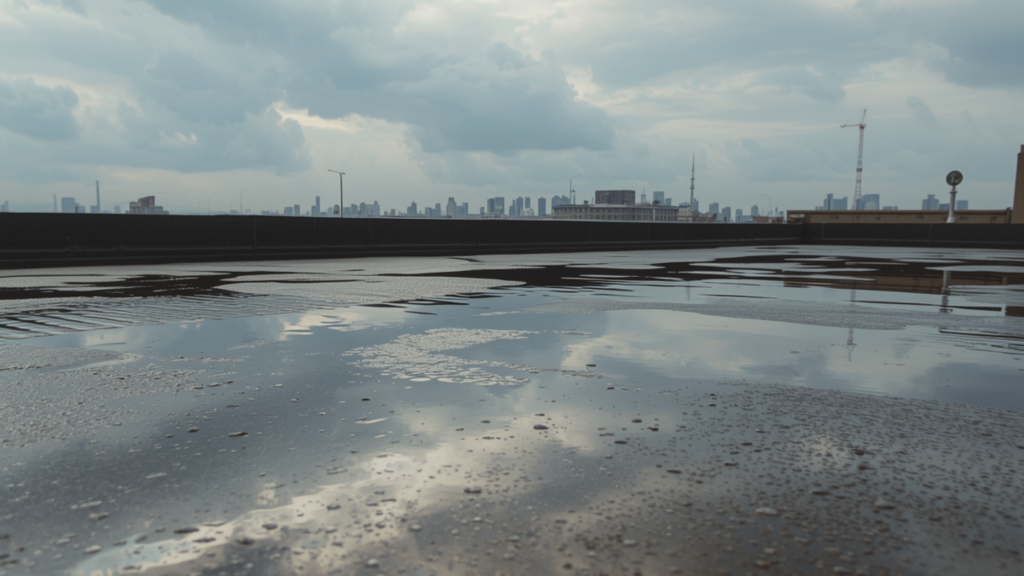
Storm patterns outlined in the National Weather Service monsoon preparedness guidance for Albuquerque help explain why short, intense events quickly overwhelm drainage systems.
Monsoon storms add another layer of stress. High-volume rainfall exposes low spots where water collects, especially on older buildings and low-slope roofs that have developed sagging roof deck areas, crushed insulation, or subtle depressions around rooftop equipment.
Secondary drainage plays a critical role as well. When overflow scuppers or secondary drains are undersized or blocked, water pooling becomes more severe, a risk highlighted in the IIBEC overview of secondary drainage and ponding requirements in IBC and IEBC.
In Albuquerque, ponding often forms behind HVAC units where foot traffic compresses insulation over time. In Rio Rancho, open-lot winds push debris into scuppers, then water backs up during the next heavy rain. In the East Mountains, wind events can shift debris into drain bowls between regular maintenance intervals.
What Ponding Water Can Damage on a Commercial Roof
Persistent ponding water accelerates wear across the entire roof system. Prolonged wetting can shorten the service life of many roofing materials, depending on the membrane type and roofing material quality.
Seams, penetrations, and parapet walls are especially vulnerable. Ponding concentrates water at laps and transitions, increasing the likelihood of leaks and water intrusion. Roof coatings may help in some situations, but not all products are compatible with constant standing water.
There is also a structural consideration. Water accumulation adds extra weight to the roof deck. Over time, this extra weight can contribute to deck deflection, drainage problems, and concerns tied to the underlying structure.
In Albuquerque office buildings, recurring ponding in one low area often leads to repeat leaks in the same spot during monsoon weeks. In Santa Fe, ponding near parapet walls increases the chance of wind-driven rain working into termination details. ARMA outlines these risks in the effects of ponding water on low-slope roof systems.
Quick Checks You Can Do Without Getting on the Roof

These steps are meant as safe screening, not repair instructions. They help property owners document ponding issues before calling a professional commercial roofing contractor.
- Interior scan after storms: Look for dark stains, new water stains, damp odors near mechanical rooms, or other signs of wet insulation. These clues often appear before visible roof damage.
- Drain discharge check: During or after heavy rain, confirm downspouts, rain gutters, and drain leaders are pulling water efficiently and not backing up.
- Ground-level roofline scan: Watch for overflow scupper staining, vegetation growth, or discoloration that can indicate chronic pooling water.
- Photo documentation: Keep a time-stamped photo log of visible ponding areas and interior staining so you can compare conditions after the next storm.
In Albuquerque, it is smart to check the drain flow after duststorms, since strainers can clog quickly. For safety guidance, refer to OSHA roofing worker safety recommendations and avoid unsafe access on commercial sites.
Fixes for Ponding Water on Flat Roofs
Choosing the right fix depends on the cause. The table below shows how common ponding issues map to practical solutions.
| Cause | Best Fix | When It’s Enough | When It’s Not |
| Debris buildup | Drain clearing | Water drains within 48 hours | True low spots remain |
| Localized damage | Targeted repairs | Isolated ponding area | Widespread pooling |
| Inadequate slope | Tapered insulation | Chronic low zones | Structural deflection |
| Limited capacity | Drain upgrades | Minor overflow issues | System-wide drainage problems |
Fix 1: Clear and Restore Drainage
This approach works when ponding is tied to clogged drains, blocked strainers, or debris buildup. The goal is proper drainage where drains pull water efficiently, and water does not remain after typical storms.
In Rio Rancho, open-lot commercial roofs often need more frequent clearing during windy periods. The limitation is that cleaning alone will not fix ponding caused by deck deflection or a sagging roof deck.
Fix 2: Targeted Repairs at Seams, Flashings, and Low Areas
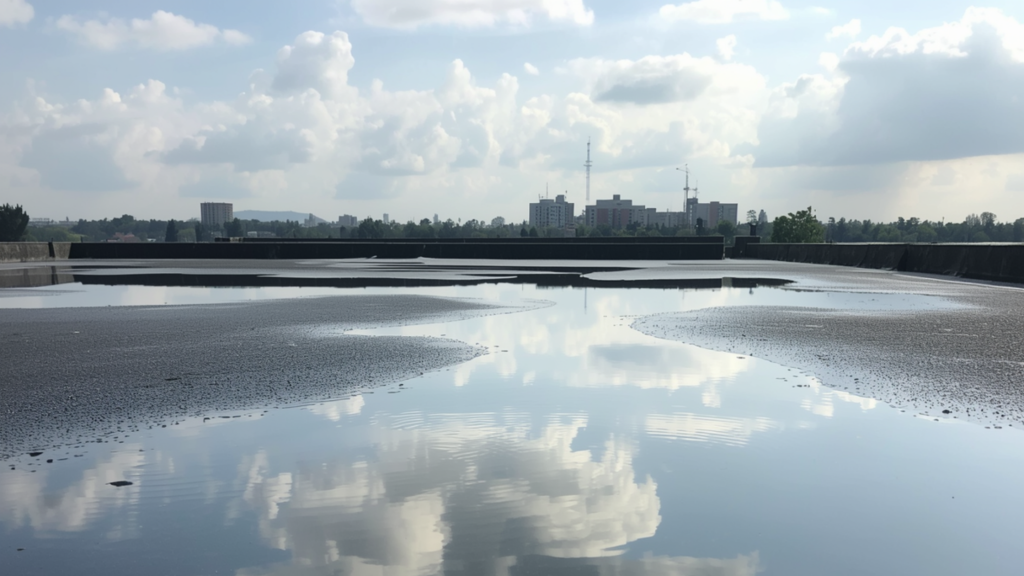
Targeted repair techniques address leaks made worse by ponding, such as open seams or damaged flashing. Repairs often focus on the affected area while also correcting the contributor, where feasible.
In Albuquerque, ponding near HVAC units is common, where service traffic scuffs details. Water sits, finds the weakest seam, and leads to roof leaks if not addressed.
Fix 3: Add Slope With Tapered Insulation
Tapered insulation is used when persistent ponding is caused by inadequate slope, settlement, or compressed insulation. This method creates positive drainage by directing water to roof drains or scuppers.
Correcting the slope reduces repeated water pooling and long-term membrane stress. Albuquerque retail roofs with long runs often benefit from tapered corrections at one chronic low zone.
Fix 4: Improve Primary and Secondary Drainage
This fix applies when drainage capacity is insufficient for high-volume storms. Secondary drainage is a safety requirement, not just a convenience.
In Santa Fe, parapet buildings rely heavily on properly sized scuppers. Correct elevation and sizing matter during cloudburst storms.
Book an On-Site Assessment for Ponding Water on Flat Roofs
If you are dealing with ponding water on flat roofs, an on-site assessment is the most reliable way to identify the cause and the most cost-effective fix. Ponding often starts with poor drainage and debris, but chronic ponding usually requires slope or drainage corrections, not just patching.
Quick checks help document the issue, but a professional assessment confirms whether maintenance, tapered insulation, or roof replacement makes sense.
East Mountain Roofing offers inspections and maintenance plans for New Mexico buildings. You can request an on-site roof assessment, learn more about a TPO roof maintenance plan, or call (505) 264-7081 to reduce future ponding and leak risk.