
Standing Seam vs. Exposed-Fastener Metal Roofing in New Mexico: How to Choose the Right System
Choosing a metal roofing system in New Mexico often comes down to one core comparison: standing seam vs exposed fastener metal. Both options are proven roofing systems across Central New Mexico, and both can perform well when they are properly installed by a qualified contractor.
The challenge for many property owners is understanding how each system handles environmental conditions like high winds, monsoon rain, hail, intense sun, and daily temperature swings.
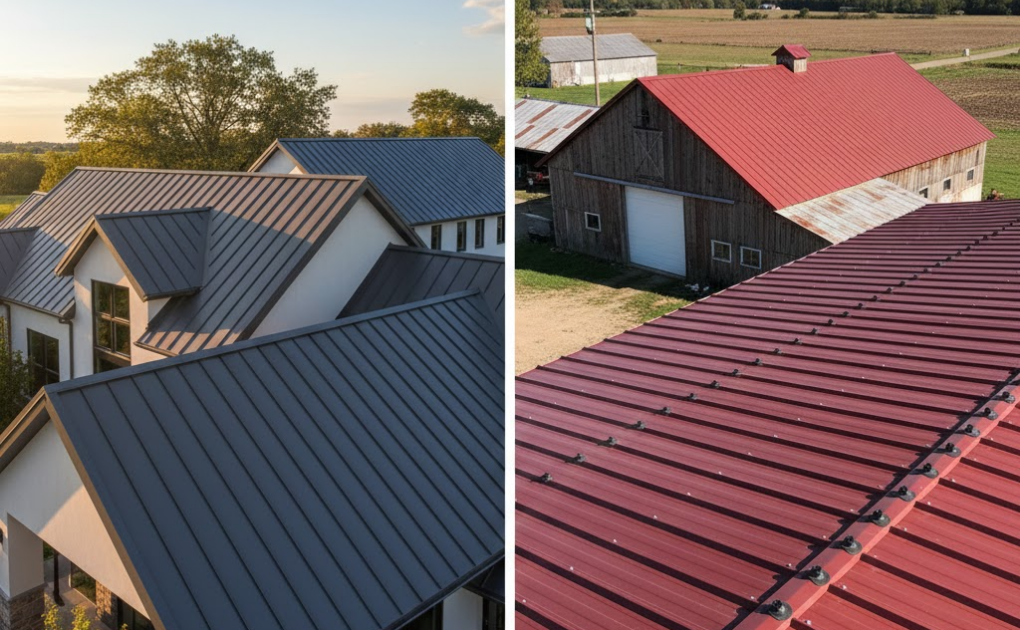
A standing seam metal roof uses vertical metal panels with raised seams and concealed fasteners. An exposed fastener metal roof uses ribbed or corrugated metal panels secured with screws and washers that remain visible.
This guide compares standing seam vs exposed fastener systems based on design, performance, maintenance, appearance, and long-term value so you can choose the right roofing material for your property.
What Standing Seam and Exposed-Fastener Metal Roofs Have in Common
Before comparing seam vs exposed fastener differences, it is important to understand what both systems share.
Both standing seam and exposed fastener roofing systems:
- Outlast asphalt shingles when properly installed
- Are non-combustible, making them well-suited for wildfire-prone areas
- Reflect sunlight, supporting energy efficiency and lower energy costs (a key principle behind cool roofs)
- Work for residential buildings and many commercial buildings
Homeowners often switch to metal roofing after repeated shingle blow-offs, cracked sealant issues, or hail damage that shortens the life of traditional roofing material. In those cases, metal offers durability and excellent weather resistance.
For both standing seam systems and exposed fastener roofing systems, proper installation matters. Panel attachment to the roof deck, flashing details, foam closures, and ventilation all affect long-term performance.
Standing Seam Metal Roofing Explained: Design, Performance, and Use Cases
Standing seam metal roofing is defined by long vertical panels that lock together at raised seams above the panel surface. These standing seam panels are attached using hidden fasteners or hidden clips rather than screws driven through the metal.
Because the fasteners are concealed, penetrating holes through the panels are minimized. Concealed fasteners reduce long-term leak risk and help the roof manage thermal movement, which is important in New Mexico’s climate.
Standing seam roofing systems are often selected for:
- Homes in exposed, high-wind locations
- Owners planning long-term occupancy
- Projects prioritizing low maintenance and aesthetic appeal
- Properties with low-slope roofs that need enhanced water shedding
In the East Mountains, seam metal roofs are common on ridgelines where wind exposure is consistent.
Hidden Fasteners and Panel Design Benefits
Standing seam systems use clips or attachment methods that allow the metal to expand and contract with temperature changes. This reduces stress on fastener systems and helps prevent cracked sealant over time.
With concealed fasteners and hidden clips, there are fewer exposed fastener heads vulnerable to UV exposure. From the ground, the roof has a sleek appearance with uninterrupted vertical ribs and wider panels.
Performance in Wind, Rain, and Snow
The smooth surface of a standing seam roof sheds water efficiently during monsoon storms. Raised seams improve resistance to wind-driven rain, particularly when storms bring heavy rain and gusts at the same time.
These systems are often specified for buildings in Edgewood, Sandia Park, and similar areas where consistent wind exposure demands a higher-performing metal roofing system.
Exposed-Fastener Metal Roofing Explained: Practical and Budget-Friendly
An exposed fastener metal roof uses ribbed or corrugated panels secured directly through the panel surface with screws. These visible fasteners include screw heads and washers that remain visible after installation.
Exposed fastener systems are widely used throughout Central New Mexico because they are practical, versatile, and cost-effective.
Common uses include:
- Budget-conscious residential roofing projects
- Garages, shops, and barns
- Agricultural structures and other agricultural structures
- Utility buildings and workshops
On rural properties in Moriarty, Estancia, and surrounding areas, exposed fastener panels are a familiar and proven roofing option.
Visible Fasteners and Panel Profiles
With exposed fastener roofing systems, screws penetrate the metal panel and secure it to the roof deck or framing. Each screw includes a washer designed to seal the penetration point.
Fastener heads are intentionally left visible across the roof surface. InterNACHI notes that these through-fastened systems rely on proper fastener placement, washer condition, and correct installation to maintain long-term performance.
Over time, thermal expansion and contraction can place stress on exposed fasteners, which is why installation quality and routine inspection matter.
Panel profiles often include vertical ribs that add strength and help manage water flow across the roof surface. When installed correctly, exposed fastener systems provide a durable, cost-effective metal roofing option, especially for residential and agricultural applications.
Maintenance Expectations Over Time
Exposed fastener roofs require periodic inspection. Temperature changes can lead to thermal movement, which may cause loose screws, worn washers, or fastener heads to back out slightly.
Fastener upkeep is manageable but should be planned for. Many property owners schedule inspections after the spring wind season to check for loose screws or early signs of wear.
Weather-Tightness in New Mexico Wind and Monsoon Conditions
When comparing standing seam vs exposed fastener performance in New Mexico weather, the main difference comes down to fastener exposure.
Standing seam metal systems generally offer higher resistance to wind-driven rain because concealed fasteners reduce direct weather exposure. Mechanical seam or snap lock systems also help maintain panel alignment over time.
Exposed fastener metal roofs can still perform well when properly installed and maintained, but fasteners are exposed to the sun and temperature swings. Over time, cracked sealant or washer degradation may require attention.
Both roofing systems must accommodate expansion and contraction. Proper spacing, attachment methods, and the overall installation process are critical for long-term durability.
Appearance, Curb Appeal, and Architectural Fit
From the street, the difference between standing seam vs exposed fastener roofs is clear.
Standing seam roofing systems offer a modern appearance with clean vertical lines and a sleek profile. They work well with various architectural styles and are often chosen for primary residences.
Exposed fastener roofs have a more utilitarian look that fits workshops, commercial buildings, and agricultural structures. Both systems are available in many colors, including painted aluminum and steel options.
Cost Differences and Long-Term Value Considerations
Rather than focusing on exact pricing, it is better to think in terms of long-term value for your roofing project.
Standing seam metal roofing typically comes with higher labor costs due to the complexity of the installation process. In return, owners often see less maintenance, minimal maintenance needs, and longer service life.
Exposed fastener options usually offer a lower upfront investment. Over time, frequent maintenance such as fastener inspections and washer replacement should be budgeted.
Which Metal Roofing System Is Right for Your Property in Central New Mexico
When you compare standing seam and exposed fastener systems, there is no universal answer.
Key factors include:
- Wind exposure at the property
- Budget comfort over time
- Desired lifespan
- Residential or commercial use
- Plans for additions like solar panels
Both standing seam and exposed fastener systems can perform well when matched to the building and installed by a qualified contractor.
Schedule a Metal Roofing Materials Walkthrough in New Mexico
If you are still deciding between standing seam vs exposed fastener metal, seeing materials in person can help. A walkthrough allows you to review metal panels, understand snap lock and mechanical seam options, and discuss roof slope and wind exposure.
East Mountain Roofing provides roof inspections and free estimates across Central New Mexico. A local evaluation helps ensure your metal roof installation is suited to your building, environment, and long-term goals. To get a free estimate, fill out the contact form and schedule your evaluation.