

Corrales’ History of Winemaking: A Look Back for Wine Lovers
Tucked along the Rio Grande, the village of Corrales is a special place for people who love wine. This small New Mexico town has been making wine for over 300 years, making it one of the oldest wine-making places in the country. While Napa Valley gets most of the attention, Corrales has quietly kept its wine tradition going—even before California started growing grapes.
The story of Corrales wine starts with Spanish missionaries, grows with help from European settlers, and stays strong through big floods and Prohibition. Today, local winemakers still carry on this proud tradition. Every bottle shares a story of strength, creativity, and the land that makes this valley so great for growing grapes.
Come along as we look back at the history of winemaking in Corrales and how this small town became an important part of America’s wine story.
The Early Days of Winemaking in Corrales
Spanish settlers transformed the Corrales valley into New Mexico’s wine country during the 17th century. When Captain Juan Gonzales Bas acquired the Alameda Land Grant in 1712, he found land that had already begun its journey toward viticultural excellence.
Spanish missionaries had introduced grapevines to the Rio Grande valley decades earlier, recognizing that the fertile floodplain soil and reliable water source created ideal growing conditions.
The Spanish brought Mission grapes, a hardy varietal that could withstand the high desert climate while producing the wine necessary for religious ceremonies. These early vineyards served both spiritual and practical purposes. Wine became essential for Catholic Mass, but it also provided a safe alternative to potentially contaminated water sources.
The acequia irrigation system, dug in the early 18th century, allowed vintners to flood their vineyard lands on both sides of the main ditch. This ancient watering method, still used today, helped establish the agricultural foundation that would support Corrales winemaking for centuries to come.
Native communities and Spanish settlers worked together during harvest seasons, creating a collaborative tradition that strengthened both the wine industry and community bonds. The Sandia Indians regularly crossed the Rio Grande to help with grape picking, arriving at dawn with songs and celebration that marked the beginning of each vintage.
The Evolution of Winemaking in Corrales
The 19th and Early 20th Century
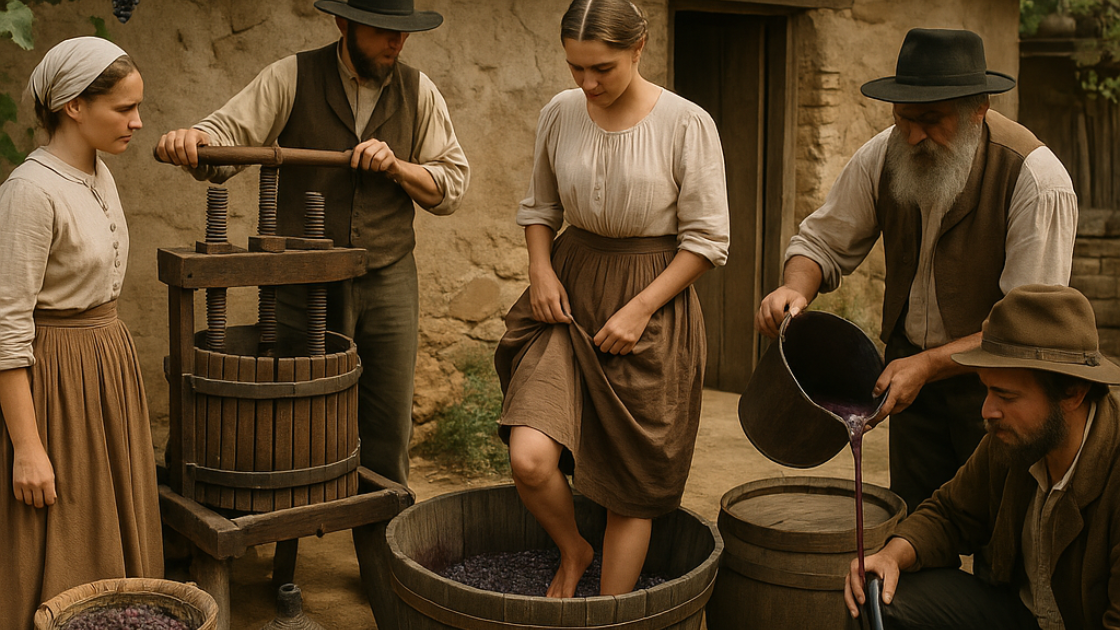
European immigration brought new expertise and ambition to Corrales winemaking during the 1860s. Settlers from Italy and France, particularly from wine regions like Bordeaux, recognized the valley’s potential and began expanding beyond the traditional Mission grape varieties.
The Alary family exemplified this evolution. Louis Alary arrived from France’s Bordeaux region and established what became known as the Alary Wine Ranch by 1900. His vineyard grew to 54 acres, featuring primarily Malvoisie grapes planted in precise six-foot spacing that yielded approximately 1,200 vines per acre.
European settlers brought advanced winemaking techniques to Corrales, adapting to its unique challenges. They protected vines from winter freezes by covering them with soil each fall and uncovering them after frost danger passed in mid-May. This labor-intensive process required community effort and shaped the valley’s agricultural rhythm.
By 1912, the Alary family had constructed a substantial winery with a 250-gallon still for grape brandy production and large wooden vats for wine aging. Their operation produced various wines and attempted more complex varieties like champagne and port, though with mixed success.
The Mid-20th Century Decline
Prohibition struck a devastating blow to Corrales winemaking in 1920. Families who had built their livelihoods around wine production faced an impossible choice: abandon their heritage or risk legal consequences.
Some, like the Targhetta family, chose to continue operating despite the risks, with family members serving time for their decision to maintain their wine business.
The 1930s brought additional challenges that pushed many vintners out of business entirely. Rising water tables increased soil alkalinity, reducing grape sugar content and overall quality. California’s expanding wine industry created competition that small Corrales producers couldn’t match, especially during the economic hardships of the Great Depression.
Natural disasters compounded these difficulties. The 1904 Rio Grande flood destroyed the Alary family’s harvest and damaged their vines so severely that they produced no crop in 1905. While they rebuilt and replanted, such setbacks became increasingly difficult to overcome as economic pressures mounted.
By the 1940s, most commercial wine production had ceased in Corrales. The knowledge and techniques passed down through generations began disappearing as families shifted to other agricultural pursuits or left farming altogether.
The Modern Revival
The late 20th century witnessed a remarkable renaissance of Corrales winemaking. New families and entrepreneurs, inspired by the valley’s viticultural history, began replanting vineyards and establishing modern wineries that honored traditional methods while embracing contemporary techniques.
This revival coincided with a broader renaissance of New Mexico winemaking. As wine tourism grew and consumers developed greater appreciation for unique, terroir-driven wines, Corrales vintners found new markets for their products.
Modern Corrales winemakers benefit from advances in viticulture and winemaking technology while maintaining the artisanal approach that characterizes the region. They’ve learned to work with the high desert climate, using irrigation strategies that reflect both ancient acequia wisdom and modern water conservation principles.
The community aspect remains central to Corrales winemaking. Local families, both longtime residents and newcomers, collaborate during harvest seasons much as their predecessors did centuries ago. This continuity of tradition, combined with innovative approaches to grape growing and wine production, defines the current era of Corrales viticulture.
Notable Wineries and Their Historical Roots
Milagro Vineyards
Milagro Vineyards represents the modern embodiment of Corrales’ winemaking heritage. Established in 1985, this estate winery operates fifteen vineyards throughout the village, producing wines that reflect both Old World techniques and New World innovation.
The winery’s commitment to estate-grown fruit connects directly to Corrales’ historical emphasis on terroir-driven winemaking. Their “handcrafted vine to wine” philosophy mirrors the artisanal approach that European immigrants brought to the valley in the 19th century.
Milagro produces an impressive range of varietals, from traditional table wines like Corrales White and Corrales Red to sophisticated varietals including Roussanne, Viognier, and Cabernet Franc. Their wines age in French oak barrels, a technique that honors the French winemaking traditions established by families like the Alarys over a century ago.
The winery maintains multiple locations for tastings, including their historic tasting room on Old Church Road and their farm stand location on Corrales Road. This accessibility allows visitors to experience Corrales winemaking history while enjoying contemporary vintages that showcase centuries of viticultural evolution.
Pasando Tiempo Winery
Founded by Chris and Martha Carpenter in 2005, Pasando Tiempo Winery embodies the community spirit that has always characterized Corrales winemaking. The name itself, meaning “passing time,” reflects the leisurely, relationship-focused approach that distinguishes Corrales from commercial wine regions.
The Carpenters planted their vineyard with help from friends and family, recreating the collaborative harvest traditions that Spanish settlers and European immigrants established generations earlier. Their goal remains simple: creating delicious wine to share with people they love.
Since opening to the public in 2011, Pasando Tiempo has become a destination for both locals and visitors seeking authentic wine experiences. Their larger tasting room accommodates wine dinners, classes, and special events that strengthen community connections around winemaking.
The winery produces varietals that thrive in Corrales’ unique climate, including Tempranillo, Montepulciano, and their certified Meritage blend. Their wines reflect the terroir that has made Corrales special for centuries while serving modern palates that appreciate both tradition and innovation.
Celebrating the Enduring Heritage of Corrales’ Winemaking
The story of Corrales winemaking shows how tradition and innovation can thrive together. From Spanish missionaries seeking sacramental wine to modern vintners crafting award-winning varietals, each generation has shaped a legacy that makes this small village significant in American wine history.
Today’s Corrales winemakers honor their roots while creating wines that cater to modern tastes. They uphold the community spirit, artisanal methods, and respect for terroir that have defined Corrales viticulture for over 300 years.
The acequia systems still flow, the Rio Grande provides fertile soil, and the high desert climate challenges and rewards those who work with it. Each bottle from Corrales reflects the dreams and efforts of everyone who has tended vines in this special valley.
Raise a glass to Corrales’ rich winemaking history. Whether exploring Milagro’s varietals or relaxing at Pasando Tiempo’s tasting room, you’re part of a tradition connecting past, present, and future through the art of winemaking.