
TPO Color Options & Energy Savings: What Works in New Mexico
When homeowners evaluate a TPO roof, color is often treated as an aesthetic choice. In New Mexico, however, TPO color options and energy savings considerations play a crucial role in comfort, performance, and long-term costs.
This guide is designed to support homeowners and building owners who want to understand how TPO color impacts energy efficiency, energy costs, and overall roof performance. We’ll look at how different TPO membranes perform in New Mexico’s high-UV, warm climates, while balancing HOA rules, architecture, and everyday performance.
Common TPO Color Options and How They Improve Energy Savings
TPO roof is a single-ply roofing membrane made from thermoplastic olefin. It is widely used on low-slope roofs and residential designs. Compared to other roofing materials, TPO offers several benefits tied to reflectivity and durability.
White TPO (Highest Reflectivity)
White TPO membranes are known for high solar reflectance and low heat absorption. These reflective properties help reflect sunlight and reduce heat transfer through the roof.
In areas like Albuquerque, Santa Fe, Rio Rancho, and the East Mountains, white TPO can significantly reduce cooling costs during long summers. Many white membranes meet standards set by the Cool Roof Rating Council (CRRC), also referred to as the Roof Rating Council CRRC.
White TPO performs best when clean. Dust and soot reduce reflectivity over time. Proper maintenance helps preserve performance and long-term savings.
Light Gray TPO (Balanced Aesthetics + Energy Savings)
Lighter-colored membranes, such as light gray TPO, still offer strong energy-saving potential. They reflect more sunlight than darker roofing materials and help reduce cooling costs during warm seasons.
Many homeowners choose this option when roof sections are highly visible. It pairs well with modern designs and residential buildings with parapets or balconies, and it’s a common preference among HOAs.
A light gray TPO roof also enhances energy efficiency while maintaining a softer, less noticeable visual appearance.
Tan TPO (Warm Appearance, Moderate Efficiency)
Tan TPO offers moderate reflectivity. It performs better than dark roofs but absorbs more heat than white or light gray membranes.
This option blends well with stucco, earth tones, and traditional New Mexico architecture. In warm climates with more sunlight and limited shade, tan TPO should be evaluated carefully during the roofing project.
Does TPO Roof Color Affect Energy Costs in New Mexico?
Roof color plays a crucial role in maximizing energy efficiency, especially in New Mexico’s climate. Several factors work together to influence results.
Why New Mexico’s Climate Makes Color Choice More Important
Higher elevation means more UV exposure. Roofs absorb more radiant heat. This increases cooling costs and places additional demand on air conditioning and HVAC systems.
Homes and commercial buildings across central New Mexico face long cooling seasons. Flat and low-sloped roofs receive more sunlight, increasing heat absorption and indoor temperature fluctuations.
How Cool Roof Reflectivity Impacts Energy Savings and Cooling Costs
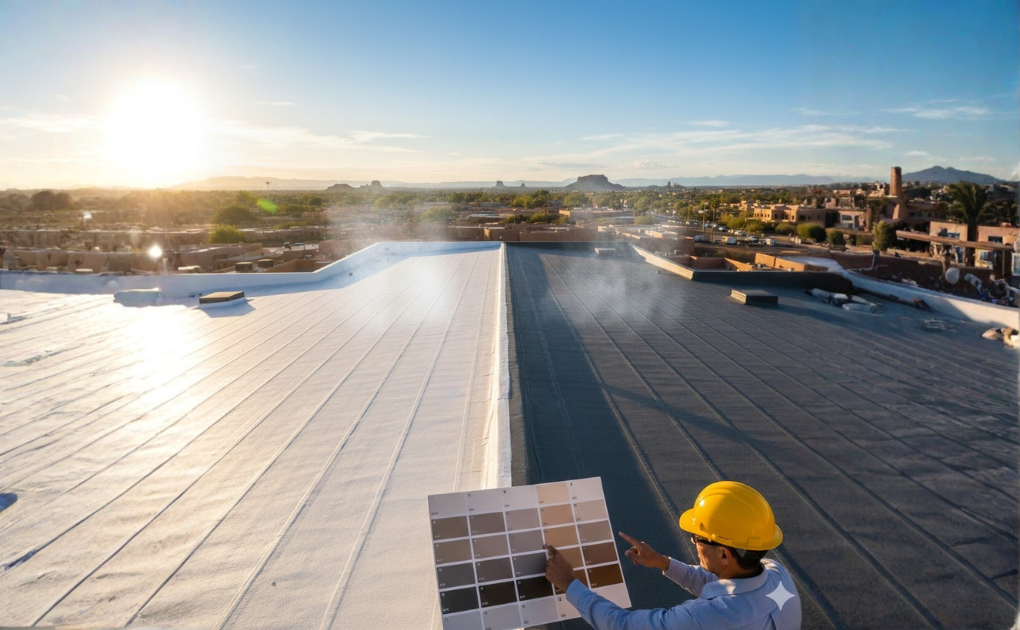
White TPO reflects the sun’s rays more effectively than darker options. This helps reduce heat absorption and keeps surface temperatures lower.
Light gray and tan TPO still improve energy efficiency, but surface temperatures are slightly higher. Over time, dust reduces reflectivity across all TPO roofs. Seasonal inspections help maintain performance.
These reflective roofing systems can also help reduce the urban heat island effect, especially in dense areas with many flat roofs.
Energy Savings Drivers Beyond Color
Roof color alone does not determine performance. Insulation, roof slope, orientation, and installation quality all play important roles in overall energy efficiency. West- and south-facing roofs benefit the most from high solar reflectance, and spaces with heavier heat loads, such as garages, workshops, or additions, often experience the biggest comfort improvements with white TPO.
For broader guidance on cool roof design and solar reflectance, the U.S. Department of Energy offers helpful information in its resource on cool roofs.
White vs. Light-Gray TPO: Which Is Better for Heat Reduction?
When comparing TPO color options, white and light gray are the most common choices for homeowners and commercial property owners.
Heat-Gain Comparison (White vs. Light Gray)
White TPO delivers the lowest rooftop temperatures during peak summer months. It reflects more sunlight and reduces heat transfer into the building.
Light gray TPO still performs well but runs slightly warmer under sustained sun exposure. On partially shaded roofs, the difference is smaller. On fully exposed roofs, white TPO stands out.
Situational Advantages of Light Gray
Light gray may be preferred when:
- Roofs are visible from upper floors
- HOA rules restrict bright white materials
- Building owners want reduced glare
- Architectural harmony is a priority
When White TPO Is the Clear Winner
White TPO is often ideal for:
- High cooling loads
- Minimal shade
- Large continuous roof areas
- Buildings aiming to significantly reduce cooling costs
White membranes help reduce energy costs and may lead to lower energy bills over time.
Visibility and Glare Considerations
White membranes can reflect sunlight strongly at certain angles. Light gray reduces glare while remaining an energy-efficient roofing choice.
What to Consider for HOAs and Architectural Requirements
Energy performance must be balanced with neighborhood and architectural guidelines.
HOA Color Restrictions
Many planned communities limit roofing materials and colors. Light gray or tan membranes are often approved where white is not.
Architectural Style Considerations
Pueblo, Territorial, and Santa Fe–style homes benefit from membranes that blend with stucco and parapets. Light-colored TPO works well with these designs.
Visibility From Decks, Patios, and Second Levels
Aesthetic harmony matters when roofs are visible. Light gray offers visual balance while still improving energy efficiency.
Approval, Documentation & Timeline
HOAs may require:
- Color samples
- Roofing system specs
- CRRC data
- Reflective performance information
East Mountain Roofing can help provide documentation during consultation.
TPO Roofing and Energy Savings in New Mexico
Understanding TPO roofing helps homeowners and commercial buildings aiming to improve energy efficiency make better decisions. TPO roofs require proper installation, correct color selection, and ongoing maintenance to deliver several benefits.
TPO is a sustainable roofing choice, offering cost effectiveness, durability, and environmental impact advantages compared to frequent replacements required by other materials like ethylene propylene rubber or darker systems—especially when property owners commit to following a TPO maintenance checklist to extend its lifespan even further.
When installed correctly, TPO roofing contributes to indoor comfort, long-term savings, and reduced energy use.
For homeowners planning a roofing project or building owners evaluating roofing systems, East Mountain Roofing offers guidance tailored to building needs. To get started, fill out our contact form to request a free roof inspection. Our team will reach out, assess your needs, and help you plan the right solution.