
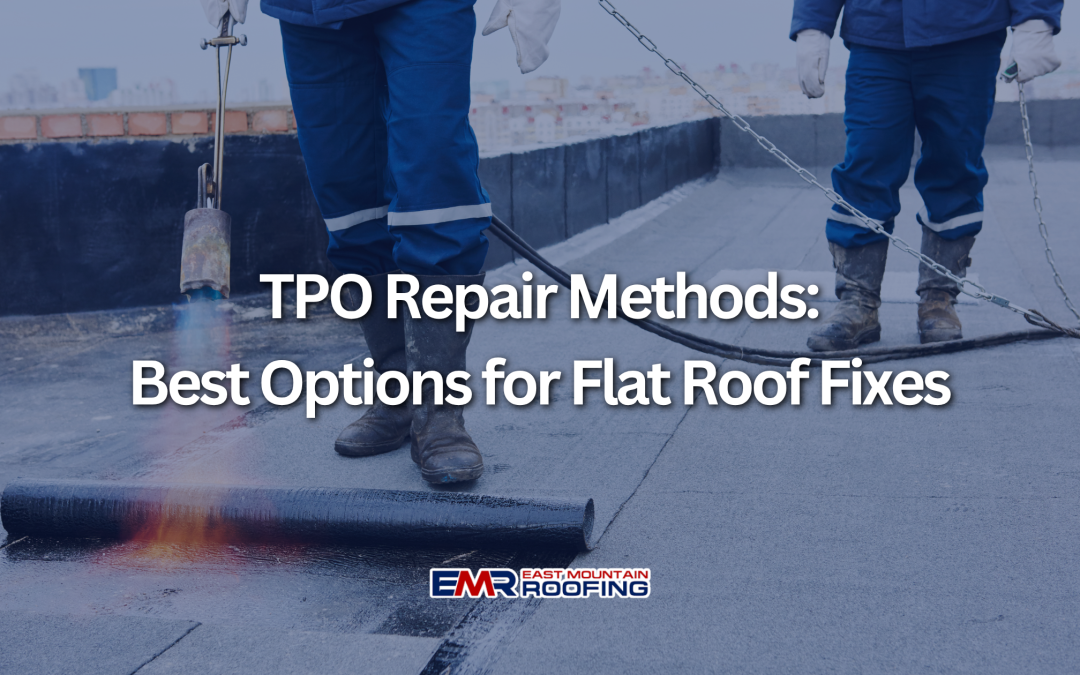
TPO Roof Repair Methods: Heat-Welded Patch vs Tape vs Coating
Not all TPO repair methods are equal. Some provide long-term solutions, while others are only suitable for immediate repair situations. Common options include heat-welded patches, seam tape, and protective coatings.
Using the wrong method can lead to recurring flat roof leaks, membrane deterioration, and costly repairs, especially in Central New Mexico, where UV degradation, thermal movement, and major storms put extra stress on your roof surface.
This guide breaks down what works, what fails, and when to rely on qualified contractors for a professional inspection.
What Makes TPO Roof Repairs Different From Other Roofing Systems
Unlike shingles or metal panels, a TPO roofing system is a single-ply membrane designed for commercial roofing systems and some residential flat roofing applications. Repairs depend on heat-welded seams rather than simple adhesives, which makes proper technique essential.
Common problem areas include seams, penetrations, flashing, and punctures in the membrane surface. In New Mexico, UV exposure, standing water, and debris accumulation accelerate wear, making TPO roof maintenance more important for property owners.
Improper repairs often fail faster on TPO systems because they disrupt the integrity of the existing membrane. According to GAF, thermoplastic membranes require precise installation and repair methods to maintain performance.
Learn more about how these systems perform with East Mountain Roofing’s TPO roofing systems.
Heat-Welded TPO Patches (Best Long-Term Repair Method)
Heat-welded repairs use a hot air gun to fuse a new TPO patch directly onto the existing membrane. This process creates a seamless bond similar to the original roof installation.
Because the membrane sheets are fused together, the repair restores the integrity of the single ply membrane and ensures proper adhesion. This method is standard across commercial roofing systems and is best handled by experienced professionals.
Heat-welded TPO repair is ideal for:
- Punctures and localized damage
- Seam failures occur along membrane joints
- Persistent flat roof leaks
- Commercial roof sections with heavy foot traffic
It is especially effective when restoring performance without needing a complete tear-off.
Pros and Cons
Pros:
- Long-lasting and durable
- Seam strength similar to the original roof
- Excellent UV protection and weather resistance
- Cost-effective over the roof’s lifespan
Cons:
- Requires specialized equipment and trained contractors
- Higher upfront cost than spot repairs
TPO Repair Tape (Quick Fix With Limitations)
TPO repair tape, often called seam tape, is a peel-and-stick solution applied directly to the TPO surface. It requires minimal tools and is commonly used for minor repairs or emergency fixes.
While it can temporarily seal a damaged area, it does not fuse with the membrane systems like heat-welded methods do.
Tape may be appropriate for:
- Small punctures or minor seam stress
- Temporary fixes before professional inspection
- Low-impact areas with minimal foot traffic
It is often used as an immediate repair solution when conditions prevent full service.
Common Failure Points
Tape repairs frequently fail due to:
- Poor surface prep and lack of proper adhesion
- UV degradation breaks down adhesives
- Thermal movement causes separation
In harsh climates like New Mexico, tape is rarely a long-term solution and can lead to repeated roof repair needs.

Roof Coatings Over TPO (When They Help and When They Don’t)
Roof coatings such as silicone coatings or acrylic coatings are liquid-applied layers installed over the existing membrane. They create a protective barrier across the roof surface and improve energy efficiency.
Proper application requires cleaning, priming, and ensuring the insulation layer and membrane thickness are intact.
Coatings are useful for:
- Aging TPO material with surface wear but no major damage
- Enhancing UV protection and reducing energy costs
- Extending the roof’s lifespan without full replacement
The U.S. Department of Energy highlights that cool roof coatings can improve energy efficiency by reflecting sunlight and reducing heat absorption.
Limitations and Risks
Coatings are not a cure-all. Risks include:
- Ineffective on active leaks without prior repairs
- Potential to trap moisture under the membrane
- Risk of voiding manufacturer warranties
They are best used as part of a comprehensive restoration plan, not as a substitute for structural repair.
What Works vs What Fails: Comparison of TPO Repair Methods
When comparing TPO repair methods, it is important to match the solution to the problem.
Heat-Welded Patch:
- Best for long-term durability
- Ideal for eliminating leaks and restoring membrane systems
- Higher upfront cost but prevents costly repairs later
Tape:
- Lower cost and fast application
- Suitable only for temporary fixes
- Higher failure rate in areas with ponding water or heavy weather exposure
Coating:
- Great for surface-level protection
- Helps reduce energy costs and extend roof life
- Not effective for structural issues or seam failures
DIY repairs may seem cost-effective, but improper methods often lead to repeated issues. Safety concerns and hidden damage also make a professional inspection essential.
Why Professional Leak Detection Matters Before Any Repair
Flat roof leaks do not always originate where water appears. Moisture can travel across the roof deck and insulation layer before showing inside the building.
A professional inspection helps identify:
- Hidden damage beneath the membrane surface
- Seam failures and weak points
- Areas of membrane deterioration
East Mountain Roofing offers free roof inspections and estimates, helping property owners plan repairs accurately and avoid wasted spending.
Get a Reliable TPO Roof Repair That Actually Lasts
Choosing the right TPO repair method can mean the difference between a lasting solution and ongoing frustration. Heat-welded repairs offer the most reliable long-term results, while tape and coatings serve more limited roles.
The key is understanding your roof type, the extent of damage, and selecting appropriate solutions that restore performance, not just patch symptoms.
Working with experienced professionals ensures proper adhesion, correct repair methods, and long term weather protection.
If you are dealing with flat roof leaks, visible damage, or unsure which repair method is right, the smartest next step is to get a professional opinion. Schedule your inspection with East Mountain Roofing today or call (505) 264-7081 to get a clear, honest recommendation and avoid costly mistakes.
Frequently Asked Questions About TPO Roof Repair
What is the most effective TPO repair method for flat roofs in New Mexico?
Heat-welded patching is the most reliable long-term repair method for TPO roofs. It uses a hot air gun to fuse a new TPO patch directly onto the existing membrane, restoring the integrity of the single-ply system. Unlike tape or coatings, heat-welded repairs create a bond similar to the original installation — which is especially important in New Mexico, where UV exposure, thermal movement, and monsoon storms put constant stress on flat roof systems.
Can TPO repair tape permanently fix a flat roof leak?
TPO repair tape is best treated as a temporary fix, not a permanent solution. While it can seal minor punctures quickly, it does not fuse with the membrane the way heat welding does. In Central New Mexico’s climate, UV degradation and thermal movement cause tape adhesives to fail relatively fast — often leading to the same leak recurring. If you’re using tape, schedule a professional inspection soon after to determine if a more durable repair method is needed.
When does a TPO roof need a coating instead of a patch repair?
Roof coatings are a good fit when the TPO membrane is aging but still structurally sound — think surface wear, minor UV degradation, or general weathering — without active leaks or seam failures. Coatings can extend the roof’s lifespan and improve energy efficiency by reflecting heat. However, applying a coating over an active leak or damaged seam will not fix the underlying problem. A professional inspection should always come first to confirm whether a coating, a patch repair, or a more comprehensive restoration is the right call.