

Silicone Roof Coating: When Does It Make Sense for a Flat Roof?
A silicone roof coating is a liquid-applied roof coating installed over a properly prepared existing roof to create a continuous protective surface. When the roof assembly is still sound, a silicone roof coating system can help protect the membrane from UV exposure, weathering, and normal wear while extending its service life.
However, a silicone coating is not the right solution for every flat roof. It works best when the roof has surface wear, repairable seams, or localized defects that can be fixed first.
If your roof has wet insulation, deteriorated decking, widespread membrane failure, unresolved flashing issues, or persistent ponding water, a coating may only delay larger repairs or replacement.
This guide explains when a silicone roof coating makes sense, when it doesn’t, and what commercial property owners should verify before investing in flat roof restoration.
Whether your roof is single-ply TPO, PVC, EPDM, modified bitumen, or another approved substrate, the right decision starts with a proper roof evaluation.

What a Silicone Roof Coating Does and Does Not Do
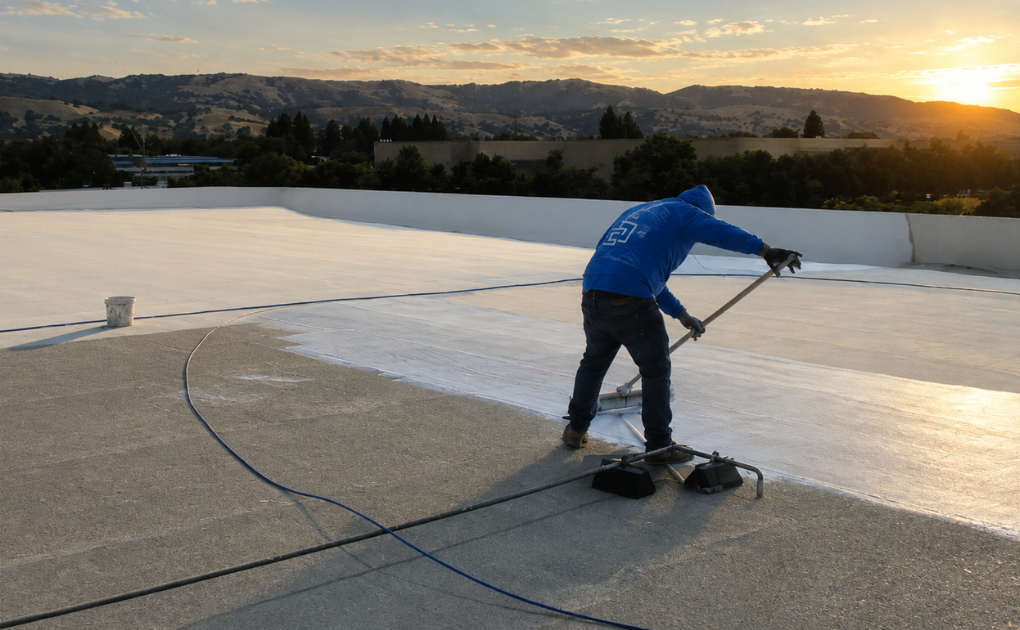
A silicone roof coating is a commercial roof coating that restores and protects an aging but serviceable existing roof. Instead of replacing the roof, it adds a protective layer over an approved substrate after proper cleaning, repairs, and preparation.
Many silicone roof coating systems use high-solids silicone, a moisture-cure material that creates a durable, flexible membrane.
A silicone coating can create a seamless protective surface, improve UV resistance, seal repaired defects, restore reflectivity, and, with approved coating products, resist ponding water under qualifying conditions.
However, a roof coating is a restoration system, not a structural repair. It cannot replace wet insulation, rebuild deteriorated decking, create positive drainage, or fix widespread failures in seams, flashing, curbs, or penetrations. It also cannot correct structural deflection or hidden damage beneath the membrane.
In short, roof restoration helps protect a roof that is still in good condition. Roof replacement is needed when the existing roof has reached the end of its service life.
When to Consider a Silicone Roof Coating
Not every flat roof needs to be replaced as soon as it begins showing signs of age. In many cases, a silicone roof coating can provide long-lasting protection when the roof remains dry, structurally sound, and repairable.
The key is understanding whether the coating is being installed over a roof that is still a good candidate for restoration.
The table below summarizes when a silicone coating may be the right choice.
| Roof Condition | May Be a Good Candidate for a Silicone Roof Coating? |
| Surface weathering with no major damage | ✔ Yes |
| Dry insulation confirmed through testing | ✔ Yes |
| Localized seam or flashing repairs needed | ✔ Yes, after repairs |
| Widespread wet insulation | ✘ No |
| Structural deck deterioration | ✘ No |
| Major drainage or slope problems | ✘ No |
| Widespread membrane failure | ✘ No |
When the Existing Membrane Is Aged but Still Fundamentally Sound
An aging roof doesn’t always need to be replaced. A silicone roof coating may be a good option if the existing roof has surface chalking, UV weathering, reduced reflectivity, or a few repairable punctures, while the membrane remains stable and securely attached.
For example, a TPO roof exposed to years of intense sunlight may show surface wear without widespread leaks or moisture beneath the membrane.
In situations like this, contractors should complete all necessary repairs, clean the roof, verify compatibility with the silicone product, and perform any required primer application before installing the restoration system.
Learn more about TPO roof repair methods for aging membranes.
When Moisture Testing Shows the Roof Assembly Is Dry
One of the most important qualifications for a successful silicone roof restoration system is confirming that the roof assembly is dry. A moisture scan is a non-destructive inspection used to identify trapped moisture beneath the membrane. Contractors may also perform test cuts or core samples in areas where hidden water is suspected.
If moisture is found, the affected insulation and roofing materials generally need to be removed and replaced before any coating is considered. Applying a waterproof silicone coating over trapped moisture can hide the problem while allowing deterioration to continue underneath.
For example, a commercial building with a history of winter leaks may appear dry during the summer, but moisture testing can reveal whether water remains trapped beneath the membrane.
When Seams, Flashings, and Penetrations Can Be Repaired First
A silicone roof coating should never be used to avoid necessary repairs. Instead, it should be installed after defects have been corrected. This may include repairing open seams, split membrane sections, failed pipe flashings, damaged curbs, loose terminations, punctures, or drain details.
Depending on the roof system, the restoration scope may also include compatible sealant, reinforcing fabrics, mastics, primers, and other manufacturer-approved coating products that prepare vulnerable areas before the final coating is applied.
For example, a commercial roof with a few service-related punctures may be an excellent restoration candidate after repairs. A roof with widespread seam failure across large sections is often a better candidate for larger corrective work.
When UV Protection and Roof Reflectivity Are Important Goals
One reason many commercial property owners choose a silicone roof coating is its ability to improve reflectivity. A bright white, highly reflective coating can reduce roof-surface temperatures by reflecting more sunlight than darker roofing materials.
According to the U.S. Department of Energy, a cool roof can remain more than 50°F cooler than a conventional dark roof under similar sunny conditions.
They also report that some single-story buildings in warm climates may experience cooling-energy reductions of up to 15%, although actual results depend on factors such as insulation levels, HVAC efficiency, roof size, climate, and ongoing maintenance.
Large warehouses in Albuquerque, where roofs receive long hours of direct sun, often prioritize reflectivity as part of their long-term roof maintenance strategy.
Learn more about TPO roofing and reflective flat-roof performance.
When the Selected Silicone System Permits Ponding Water Exposure
Some high solids silicone coatings are specifically formulated to resist qualifying ponding water conditions. This makes silicone roof coating systems a common choice for certain flat roofs where limited water remains after rainfall and the manufacturer permits this type of exposure.
That said, resistance to standing water does not solve the underlying cause of drainage problems. A silicone coating cannot create slope, correct structural deflection, or fix blocked drains and poorly designed scuppers.
For example, if monsoon rains repeatedly leave water near a scupper on a commercial roof in Albuquerque, the drainage issue should be evaluated before deciding whether a coating is appropriate.
If your roof regularly experiences ponding water, learn more about ponding water on flat roofs and TPO-specific fixes.
When Silicone Coating May Only Delay Bigger Roof Work
A silicone roof coating can be an effective restoration solution, but only when the roof beneath it remains stable and repairable.
If the underlying problems involve moisture, structural damage, or widespread membrane failure, applying a roof coating may only hide visible symptoms instead of solving the real issue. Understanding these conditions can help you decide whether to coat or replace a flat roof.
When Insulation or Decking Is Wet or Deteriorated
A silicone coating is not the right primary solution when moisture has already reached the insulation or roof deck. Saturated insulation, soft or corroded decking, delaminated materials, or widespread moisture beneath the membrane usually require damaged components to be removed and replaced before any restoration work begins.
Covering these issues with a silicone roof coating may temporarily improve the roof’s appearance, but it does not restore the damaged assembly underneath.
For example, if a commercial building in Central New Mexico has experienced recurring interior leaks after several monsoon seasons, the roof should undergo a thorough subsurface evaluation before restoration is considered.
When Leaks Come From Failed Flashing or Roof Edge Details
Not every flat-roof leak begins in the open field of the membrane. Many leaks develop around flashing, parapet walls, coping, drains, equipment curbs, wall terminations, and other transition points where different roofing materials meet.
A field-applied silicone roof coating will not automatically repair loose coping, damaged scuppers, failed flashing, or unsealed wall penetrations. Those details should be repaired or rebuilt before the restoration system is installed.
For example, a recurring leak during Rio Rancho’s wind-driven rain may actually originate at a parapet or coping joint rather than the membrane itself.
When the Membrane Is Widespreadly Brittle, Loose, or Failing
A roof coating depends on the condition of the roof beneath it. If the membrane has become brittle, is losing adhesion, has widespread failing seams, or contains incompatible previous coatings, restoration may no longer be the best investment.
An adhesion test helps determine whether the selected silicone product can bond properly to the existing roof. If the substrate is unstable, even a high-quality silicone roof coating system cannot deliver reliable performance or long-lasting protection.
An aging single-ply TPO roof with widespread seam failure, for example, may be a stronger candidate for replacement than a complete surface coating.
What a Proper Silicone Coating Scope Should Include
A quality silicone roof coating proposal should explain how the existing roof will be evaluated, repaired, and prepared, not simply recommend a new roof coating. This helps property owners determine whether the proposed silicone roof coating system fits the roof’s actual condition.
A quality silicone roof coating proposal should clearly explain what’s included before any work begins. At a minimum, the scope should include:
- A moisture scan and removal of wet materials when needed.
- An adhesion test and the required primer.
- Repairs to seams, flashing, drains, curbs, and penetrations before the silicone coating is installed.
- The approved silicone product and compatible substrate.
- The required dry-film thickness and any reinforcement for vulnerable details.
A detailed scope helps you understand exactly what work will be completed and whether a silicone roof coating is the right solution for your roof.
Finally, review the warranty and ask whether the roof will remain easy to maintain after the coating is installed.
Future repairs may require silicone-compatible sealant and coating products. In New Mexico, where dust and rooftop equipment traffic are common, proper preparation is just as important as the coating itself.
For ongoing maintenance, review our TPO roof maintenance checklist for commercial owners.
When Drainage or Structural Deflection Is the Real Problem
One of silicone’s advantages is its resistance to qualifying ponding water, but that does not mean it corrects the cause of the problem. A silicone coating cannot create positive drainage, lift settled insulation, straighten a sagging deck, or improve poorly designed drainage systems.
When standing water continues to collect after storms, it can trap dirt and debris, increase maintenance needs, and place additional stress on seams and flashing details.
For example, a low section of a roof that continues holding water days after a monsoon should receive a drainage evaluation before a silicone roof coating is considered. Addressing the underlying drainage issue first helps protect the roof life and supports better long-term results from any restoration system.
Confirm Whether Restoration or TPO Replacement Fits Your Roof
A silicone roof coating can extend the service life of a dry, stable, and repairable flat roof, but it cannot fix wet insulation, deteriorated decking, drainage problems, or a failing membrane. Confirm the roof is a good candidate before choosing restoration.
Your contractor should inspect the roof, perform moisture testing and an adhesion test, repair damaged seams, flashing, curbs, penetrations, and drains, and verify the approved silicone roof coating system, primer, dry-film thickness, and warranty requirements.
East Mountain Roofing helps commercial property owners compare repair, flat roof restoration, and TPO replacement based on the roof’s actual condition. We install and repair TPO flat roofs and provide free inspections and estimates throughout Albuquerque, Rio Rancho, Santa Fe, Edgewood, and Central New Mexico.
If you’re comparing a silicone roof coating with TPO replacement, schedule a TPO roof evaluation or reach out to our team for a professional assessment.