
Commercial Roof Replacement Cost in New Mexico: Key Factors to Consider
Planning a commercial roof replacement in New Mexico? The total cost depends on more than the size of your building. Roofing materials, labor, insulation, drainage, and hidden damage can all affect your final estimate.
New Mexico’s intense UV exposure, strong winds, and seasonal storms also influence roofing material choices. We consider these conditions when helping commercial property owners plan a roof replacement.
In this guide, we’ll explain the main factors that affect commercial roof replacement costs. We’ll also share lessons from our roofing projects in Albuquerque and Santa Fe to show how building conditions can change the work required.
What Affects Commercial Roof Replacement Cost in New Mexico?

There is no fixed price for every commercial roof replacement. Two buildings with the same roof size may have different costs because of their design, condition, and roofing system.
When we inspect a commercial roof, we look at several factors that can affect the replacement cost:
- Roof size: Larger roofs generally require more materials, labor, and installation time.
- Roof design: Flat roofs, sloped roofs, and roofs with several sections have different installation needs.
- Existing damage: Leaks, wet insulation, and damaged roof decking may require additional repairs.
- Roofing material: TPO, metal roofing, and shingles have different material and labor requirements.
- Building access: Tall buildings or limited work areas may require special equipment.
- Permits: Local building requirements can affect the project scope and schedule.
Roofing contractors often use square foot measurements to estimate material quantities. However, the price per sq ft alone cannot show the full cost of replacing a commercial roof.
That’s why we recommend a professional inspection before making decisions based on a roofing quote.
How Commercial Roofing Materials Affect Replacement Costs
The type of roofing material you choose affects installation costs, maintenance needs, and long-term roof performance. We work with TPO, metal, and shingle roofing systems, depending on the building’s design and needs.
TPO Roofing for Flat Commercial Roofs
TPO is a single-layer roofing material commonly used on flat and low-slope commercial roofs. Its reflective surface helps reduce heat from direct sunlight.
TPO replacement costs depend on membrane thickness, insulation, drainage, and installation details. Roofs with several vents, pipes, or equipment units may need more sealing work.
Metal Roofing for Commercial Buildings
Metal roofing is another option we install for commercial properties in New Mexico. It offers durability, fire resistance, and protection against challenging weather.
Prices vary based on the type of metal, roof shape, panel design, and installation needs. We encourage property owners to compare the initial investment with expected maintenance and service life.
Shingle Roofing for Sloped Commercial Roofs
Shingles may be suitable for commercial buildings with sloped roofs. They are generally affordable and can be easier to repair than some other roofing systems.
Replacement costs depend on shingle quality, roof size, and the condition of the existing materials. We assess the roof’s design before recommending whether shingles are a suitable option.
How Tear-Off and Hidden Roof Damage Increase Replacement Costs
A tear-off involves removing old roofing materials before installing a new system. The number of existing layers, disposal needs, and roof condition can affect the labor and time required.
One thing we’ve learned from commercial roofing projects is that older roofs can hide materials and damage that aren’t fully visible during the initial inspection.
Hidden Roofing Materials Discovered During a Santa Fe Roof Replacement
During an 8,700-square-foot commercial roof replacement in Santa Fe, our crew discovered five to six inches of hidden pumice beneath several older roofing layers.
Removing the unexpected material extended the planned tear-off from about one week to two weeks. The work required around 13 separate 30-yard trailers or dumpsters.
We also found damaged sections of the steel roof deck. Another contractor replaced the affected areas before our team continued installing the new roof.
These conditions increased the work, disposal needs, and project time. However, we did not charge the general contractor extra for the additional pumice removal on this job.
This project reinforced why we look closely at existing roof conditions and recommend discussing possible hidden damage before approving a replacement estimate.
Insulation and Roof Deck Repairs
A full replacement may also involve removing damaged insulation or repairing the roof deck.
Insulation helps control heat transfer, while the roof deck supports the roofing system. If either is damaged, additional work may be needed before installing the new materials.
We also consider insulation upgrades when updated building requirements apply. These changes can affect the replacement cost and the work needed to complete the roof.
Why Drainage, Roof Equipment, and Building Access Affect Commercial Roofing Costs
Commercial roofing projects often involve more than installing a new membrane or roof covering.
Flat roofs need proper drainage to move rainwater away from the surface. During an inspection, we check for areas where water collects and whether drainage improvements may be needed.
Roof openings around vents, pipes, and equipment also need careful sealing. Gutters, roof edges, and other drainage parts may need attention depending on the building.
Our Commercial TPO Roof Replacement in Albuquerque
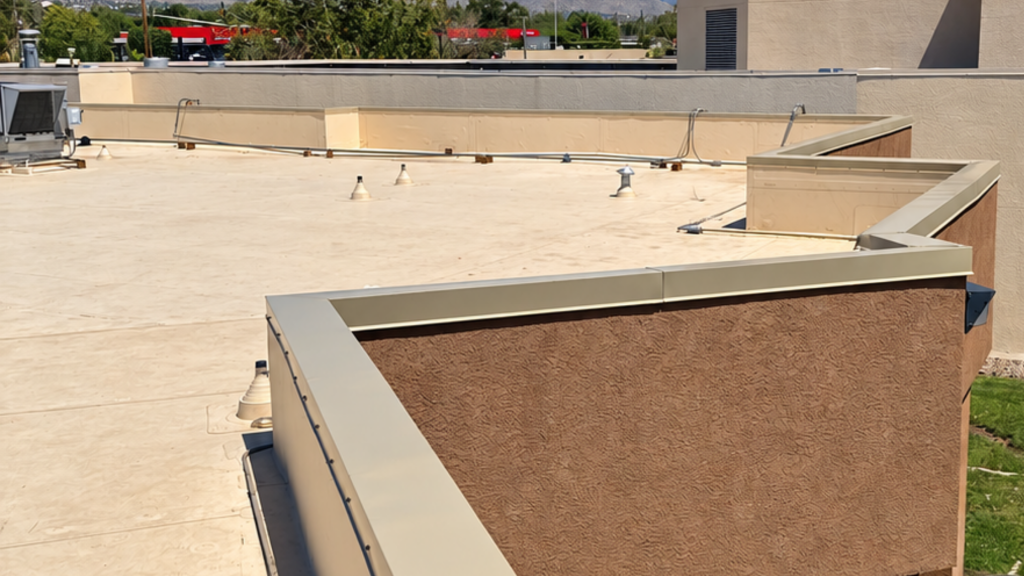
On a 6,109-square-foot commercial roof replacement in Albuquerque, we replaced an aging tar and gravel roof with a 60 mil TPO system.
The project included six raised drainage sections designed to guide water away from problem areas. Our crew also repaired damaged parapet wood and installed approximately 363 linear feet of steel coping along the roof edges.
Electrical conduit needed to be moved by a qualified electrician before some roofing work could continue.
The medical office remained open during the project, so we coordinated parking, deliveries, work hours, and entrance access to limit disruptions.
Our team completed the main roofing installation in approximately two weeks. This project shows how drainage repairs, electrical work, and building access can affect commercial roof replacement planning.
How Commercial Roof Warranties and Project Scheduling Affect Your Budget
Roofing warranties can differ based on the materials, installation requirements, and coverage offered.
At East Mountain Roofing, we provide a 10-year labor warranty on new roofs, with manufacturer warranties of up to 30 years depending on the product.
We encourage property owners to review what each warranty covers and whether special installation requirements apply. A longer warranty does not always mean every type of damage is covered.
Planning Roof Replacement Around Business Operations
Some commercial buildings need roofing work completed in stages to keep daily operations running.
A roofing project may require adjusted work hours, safe customer access, or special delivery schedules. These needs can affect labor, equipment availability, and the total project timeline.
We discuss scheduling needs with property owners before work begins so the roofing plan accounts for how the building is used.
How to Compare Commercial Roof Replacement Estimates
Comparing quotes from roofing companies requires more than checking the lowest price.
When reviewing a commercial roofing estimate, we recommend looking closely at the materials, labor, and services included in the job.
Before choosing a contractor, ask these questions:
- Does the estimate include the full tear-off and disposal of old materials?
- What type of roofing system and insulation will be installed?
- Are drainage repairs, gutters, and roof openings included in the scope?
- How will hidden damage and additional work be priced?
- Are permits, cleanup, and inspections included?
- What labor and manufacturer warranty coverage applies?
- How long will the project take, and what could affect the schedule?
If your roof has storm damage, it’s also worth checking whether your insurance policy may apply. Coverage depends on the policy and cause of damage, so it should not be assumed.
We offer roof inspections and free estimates, with written estimates typically provided within 24–48 hours after the estimate appointment.
Get a Commercial Roof Replacement Estimate in New Mexico
Commercial roof replacement costs depend on roof size, materials, existing damage, drainage, and building access. A detailed inspection helps us understand the work required before recommending a replacement plan.
At East Mountain Roofing, we provide commercial roofing services in New Mexico, including TPO, metal, and shingle roof replacement. Our team serves commercial property owners in Albuquerque, Santa Fe, Edgewood, and surrounding Central New Mexico communities.
Whether you’re replacing an aging roof or planning upgrades for your business, we’re here to help you understand your options and make an informed decision.
Contact East Mountain Roofing at (505) 264-7081 to schedule a roof inspection or commercial roof replacement estimate.